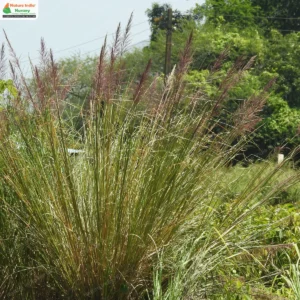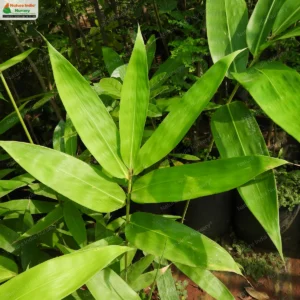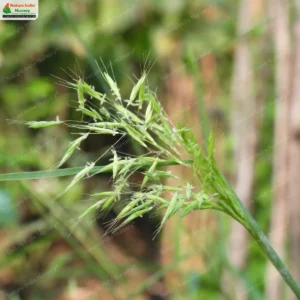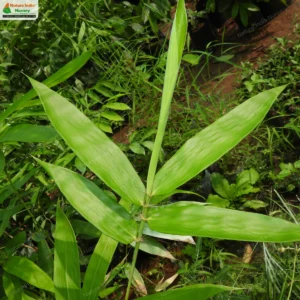
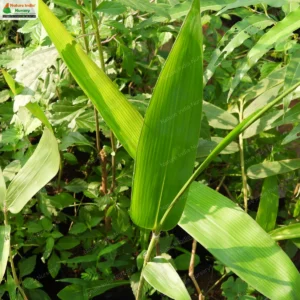
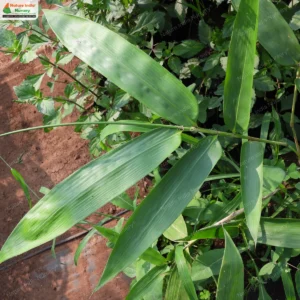
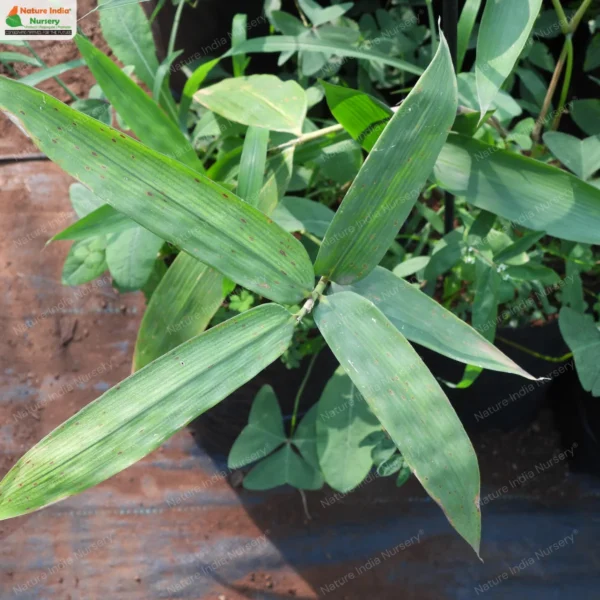


Ochlandra travancorica, commonly known as Travancore Reed Bamboo, is a perennial, clump-forming bamboo belonging to the Poaceae (grass) family. It is native to southwestern and southern India, particularly the Western Ghats, where it grows naturally in wet tropical forests and along streams and river valleys.
The species forms dense, woody clumps with erect, hollow culms typically reaching 2–6 metres in height. The culms are slender to moderately thick, with swollen nodes and persistent or deciduous hairy sheaths. Its leaves are oblong-lanceolate, relatively broad, and pointed at the tip. Flowering structures are large, branched, and spike-like, bearing clustered spikelets.
Habitat
Travancore Reed Bamboo is characteristic of tropical evergreen and semi-evergreen forests, especially moist valleys, stream banks, river margins, and humid mountain slopes of the Western Ghats. It can form dense reed thickets and is generally associated with warm, high-rainfall environments.
Planting and Care
Light: Full sun to partial shade; performs particularly well in bright, humid conditions.
Soil: Deep, fertile, organic-rich, well-drained soil with good moisture retention.
Watering: Requires regular moisture, especially during dry periods; avoid prolonged severe drought.
Maintenance: Allow adequate space for clump development. Remove old or damaged culms periodically to maintain an open, healthy clump. Provide sufficient moisture and organic mulch in cultivated settings.
Additional Information
Ornamental Use: Suitable for large landscapes, tropical gardens, naturalistic plantings, screening, and erosion-control areas where a tall reed-like bamboo is desired.
Ecological Importance: Dense stands provide shelter and habitat for wildlife and contribute to soil stabilization along streams and forested slopes. Reed bamboo thickets in the Western Ghats also provide important microhabitats for specialized fauna.
Economic Importance: The strong, straight culms have traditionally been used for paper pulp, mat and basket making, bamboo panels, handicrafts, fishing rods, umbrella handles, walling, and other rural applications. The leaves can also be used for thatching.
Special Feature: It is a characteristic Western Ghats reed bamboo, capable of forming dense, almost impenetrable clumps in suitable wet habitats.
Propagation: Propagation can be carried out through seeds and vegetative methods, including division or other clump-based planting material.
Flowering and Fruiting: Flowering has been recorded mainly during November–May, although the timing can vary with locality and environmental conditions.
Regional Names: Documented Malayalam names include Eera, Eetta, Kareetta, Oda, Vei, Vezhal, and Vezhampullu.