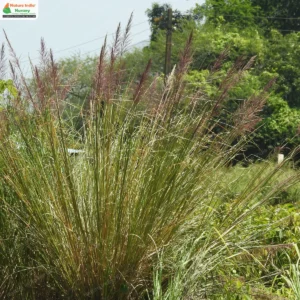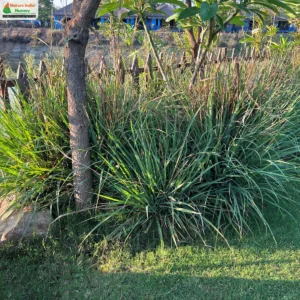
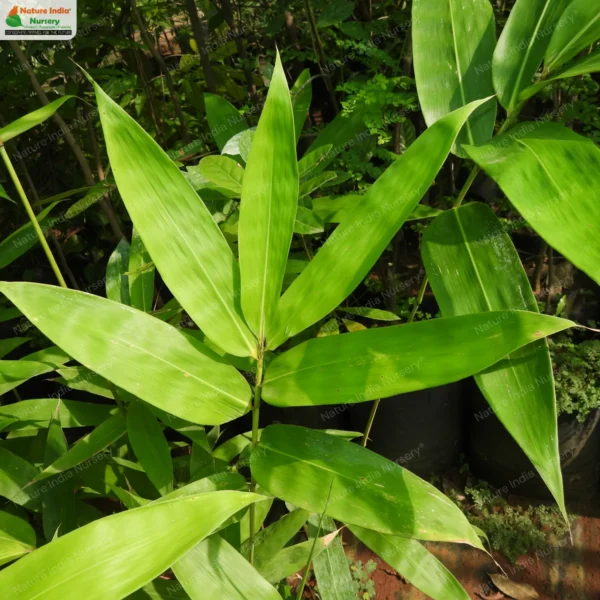

Bambusa tulda is a tall, clump-forming, perennial bamboo belonging to the Poaceae (grass) family. Native to the Indian subcontinent and parts of Southeast Asia, it is valued for its strong, versatile culms and rapid growth. It is widely used in construction, handicrafts, furniture, basketry, and paper production.
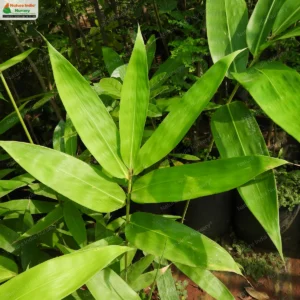
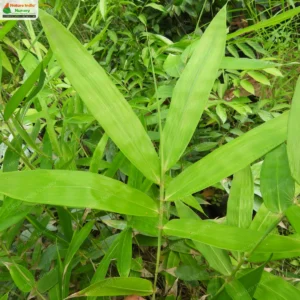
The plant typically grows to around 12–20 metres tall, with erect, woody, jointed culms that are usually green when young and may become darker with age. The culms are relatively thick, with hollow internodes and distinct nodes. Its long, narrow, pointed leaves form a dense green canopy. Flowering is infrequent and may occur in large, synchronised cycles.
Habitat
East Indian Bamboo grows in tropical and subtropical regions, particularly in moist deciduous forests, river valleys, plains, and along streams. It thrives in warm climates with good rainfall and fertile soil, though established clumps can tolerate seasonal variations in moisture.
Planting and Care
- Light: Full sun is ideal; it can tolerate partial shade.
- Soil: Prefers fertile, well-drained loamy soil rich in organic matter.
- Watering: Water regularly during establishment and dry periods. Keep the soil moderately moist without prolonged waterlogging.
- Maintenance: Remove dry or damaged culms to maintain a healthy clump. Allow adequate room for mature growth.
- Propagation: Commonly propagated through rhizome division, offsets, culm cuttings, or nursery-raised seedlings.
Additional Information
Practical Uses: The strong culms are used for house construction, scaffolding, poles, furniture, baskets, mats, screens, household articles, handicrafts, and paper pulp. Young shoots are eaten in some regions, often after preparation such as pickling.
Environmental Benefits: Its dense root and rhizome system can help stabilise soil and reduce erosion. It can also provide shelter for small wildlife and contribute to green windbreaks.
Special Feature: Bambusa tulda is prized for its strong, relatively straight culms, making it one of the commercially useful bamboo species of India.
Flowering: Like many bamboos, it flowers infrequently, sometimes after long intervals. Flowering cycles vary by population and location.
Botanical Note: The accepted scientific name is Bambusa tulda Roxb. It belongs to the grass family, Poaceae; Dendrocalamus tulda is a recorded synonym.