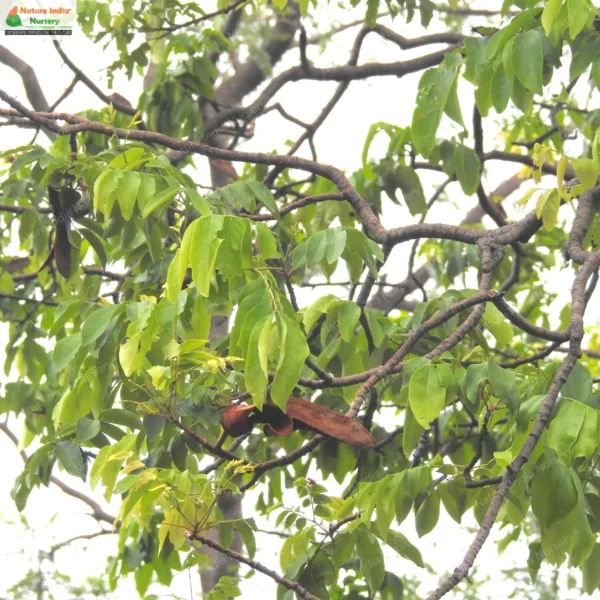

Xylia xylocarpa, commonly known as Burma Ironwood, is a large deciduous tree belonging to the Fabaceae family. Native to tropical South and Southeast Asia, it is valued for its exceptionally hard, durable timber and its importance as a characteristic tree of tropical deciduous forests.
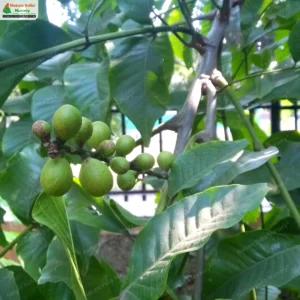
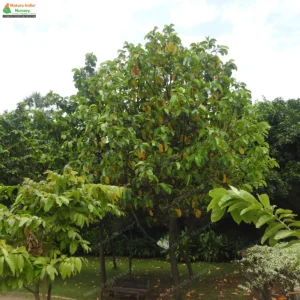
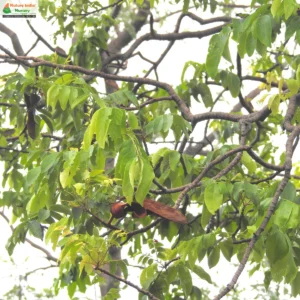
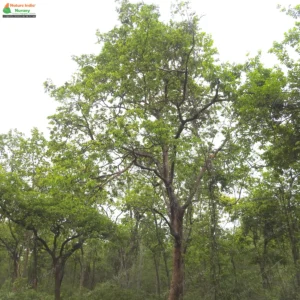
The tree typically grows 20–30 m tall, developing a broad, spreading crown and a stout trunk. Its bark is grey to dark brown and may become rough and fissured with age. The leaves are bipinnate, with numerous small leaflets, giving the foliage a fine, feathery appearance. Small yellowish to cream flowers occur in dense rounded heads, followed by distinctive thick, woody, flattened to curved pods containing hard seeds.
Habitat
Xylia xylocarpa occurs naturally in tropical deciduous and dry forests, woodland, and forest margins. It is distributed across parts of India, Myanmar, Thailand, Laos, Cambodia, Vietnam, and neighbouring regions. It generally performs well in warm climates with a pronounced dry season and is adapted to seasonally dry forest conditions.
Planting and Care
Light: Requires full sun for healthy growth and good crown development.
Soil: Prefers deep, fertile and well-drained soil, but established trees can tolerate a range of soil conditions, including relatively dry soils.
Watering: Provide regular watering during establishment. Mature trees are comparatively drought tolerant and require less supplementary irrigation.
Maintenance: Requires ample space for its large canopy. Young plants benefit from protection and regular watering until well established. Pruning can be carried out to remove weak, damaged, or crossing branches.
Spacing: Plant well away from buildings, underground utilities, and other large trees because of its eventual size and extensive crown.
Additional Information
Timber Importance: The wood is very hard, heavy and durable, making it an important timber species. It has traditionally been used for construction, beams, posts, flooring, agricultural implements, carts, furniture, and other applications requiring strong, durable wood.
Ecological Importance: As a native deciduous forest tree, it contributes to forest structure, provides habitat for insects and other organisms, and participates in nutrient cycling within seasonal forests. Like other legumes, it is associated with nitrogen-fixing symbioses that contribute to soil fertility.
Ornamental Use: Although primarily valued as a timber and forest species, its large spreading crown and attractive fine-textured foliage make it suitable for large landscapes, institutional campuses, botanical collections, and restoration planting where sufficient space is available.
Special Feature: The combination of exceptionally hard timber, fine bipinnate foliage, and distinctive thick woody seed pods makes Xylia xylocarpa a notable tropical forest tree.
Propagation: Primarily propagated by seeds. Fresh or properly stored seeds can be sown in a well-drained nursery medium and transplanted after the seedlings become established.
Flowering and Fruiting: Flowering generally occurs toward the late dry season and early rainy season, followed by the development of characteristic woody pods. The exact timing varies according to regional climate.
Cultural and Regional Significance: The species is known by several regional names in India, including जंबू, जांभा, and येरूळ, reflecting its recognition in local forestry and traditional plant knowledge.
Taxonomic Note: Xylia xylocarpa (Roxb.) Taub. is the accepted botanical name. It belongs to the legume family Fabaceae, subfamily Caesalpinioideae.