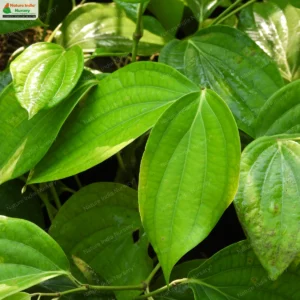


Piper nigrum is a perennial, woody climbing vine belonging to the Piperaceae (pepper family). Native to the tropical regions of South Asia, it is one of the world’s most important spice plants and is widely cultivated in India, particularly in warm, humid regions. Its dried fruits, known as peppercorns, are prized for their pungent flavour and aroma.
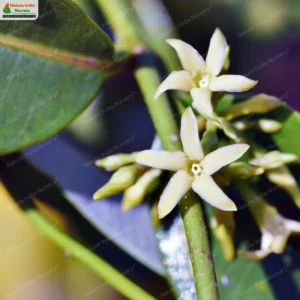
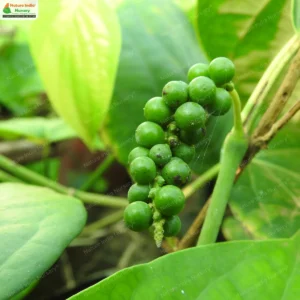
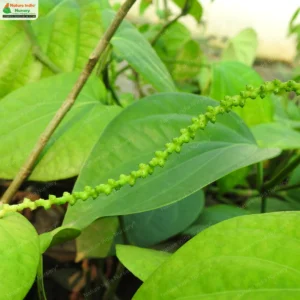
The plant can climb several metres when provided with suitable support. It has slender, jointed stems, glossy, dark-green, oval to heart-shaped leaves, and small flowers arranged along slender spikes. The fruits develop as round berries, initially green and turning red when fully ripe. Dried unripe berries are commonly processed as black pepper, while ripe fruits with their outer skin removed are used to produce white pepper.
Habitat
Black Pepper thrives in warm, humid tropical climates and is associated with the evergreen forests of the Western Ghats. It grows well under filtered sunlight and is commonly cultivated beneath shade trees or alongside support poles in plantations. It prefers moist, well-drained soil and protection from strong, drying winds.
Planting and Care
- Light: Partial shade or filtered sunlight is ideal; avoid intense, prolonged exposure to harsh afternoon sun.
- Soil: Fertile, humus-rich, well-drained soil with good organic matter content.
- Watering: Water regularly to maintain consistent moisture, particularly during dry weather. Avoid waterlogging around the roots.
- Maintenance: Provide a sturdy support tree, pole, or trellis for climbing. Mulch the root zone, remove dead stems, and monitor for pests and fungal diseases.
- Propagation: Commonly propagated through stem cuttings, especially healthy runner shoots.
Additional Information
Culinary Uses: Black Pepper is widely used as a seasoning in curries, soups, sauces, marinades, vegetables, and numerous other dishes. Black, white, and green peppercorns all come from the same species but differ in maturity and processing.
Essential Oil and Active Compounds: The fruits contain piperine, the compound chiefly responsible for their pungency, along with aromatic volatile oils. Pepper is also used in oleoresin and essential-oil production.
Traditional Significance: Black Pepper has a long history in Ayurveda and other traditional systems. Although research has investigated its chemical constituents, traditional uses should not be considered proof of treatment effectiveness.
Economic Importance: It is a valuable commercial spice crop and an important component of agricultural livelihoods and the international spice trade.
Special Feature: The plant’s climbing habit, glossy foliage, and clusters of colourful berries make it both an economically valuable crop and an interesting addition to suitable tropical gardens.