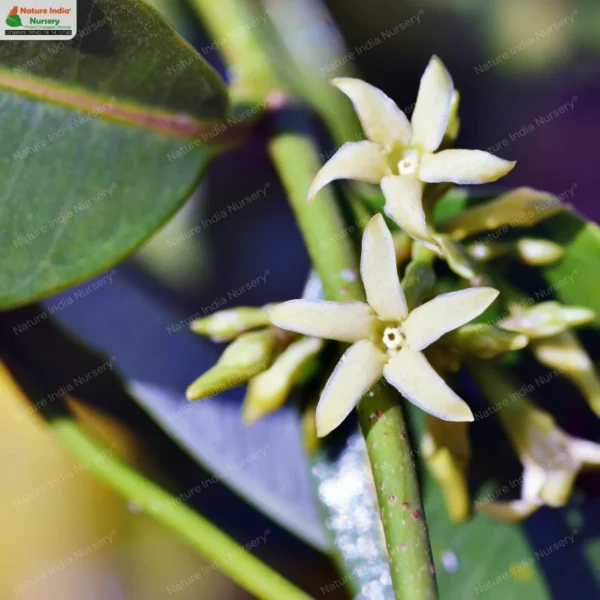
Cryptolepis buchananii, commonly known as Wax Leaved Climber or Indian Sarsaparilla, is a perennial climbing shrub belonging to the Apocynaceae family. It is native to the Indian subcontinent and extends into southern China and Indochina. The species is a characteristic twining plant of forest margins, foothills, hedges, and cleared slopes.
The plant is a vigorous woody climber or liana with milky latex and glossy, simple, opposite leaves. Its small greenish-yellow flowers occur in branched inflorescences, followed by paired slender follicles containing numerous seeds with silky, tufted hairs.
Habitat
It occurs in moist and dry deciduous forests, forest edges, plains, foothills, and open or cleared slopes, and has been recorded at elevations up to about 1,300 m. It can readily colonize hedges and disturbed forest margins.
Planting and Care
Light: Full sun to partial shade; good light encourages vigorous growth and flowering.
Soil: Prefers fertile, well-drained soil with some organic matter. It can tolerate a range of forest and garden soils once established.
Watering: Provide moderate and regular moisture during active growth, while avoiding prolonged waterlogging.
Maintenance: Provide a trellis, fence, or other support for the twining stems. Occasional pruning can be used to control its spread and maintain the desired shape.
Additional Information
Ornamental Use: Its glossy foliage and vigorous climbing habit make it suitable for covering fences, trellises, pergolas, and natural screens.
Ecological Importance: As a native climbing plant of forest margins and woodland habitats, it contributes to the structural diversity of vegetation and provides additional cover within these habitats.
Medicinal Importance: Cryptolepis buchananii has a history of traditional use in several parts of India. Its milky latex and other plant parts have been used in traditional remedies, including preparations associated with skin ailments. Such traditional uses should not be considered established clinical treatments.
Special Feature: The combination of glossy wax-like leaves, milky latex, twining growth, and greenish-yellow flowers makes this species distinctive among native climbers.
Propagation: It can be propagated from seeds; vegetative propagation by suitable stem cuttings may also be possible under appropriate conditions.
Flowering and Fruiting: Flowering and fruiting are generally recorded from March to September. The fruits develop as paired follicles containing numerous silky-haired seeds adapted for dispersal.