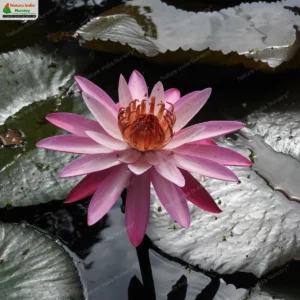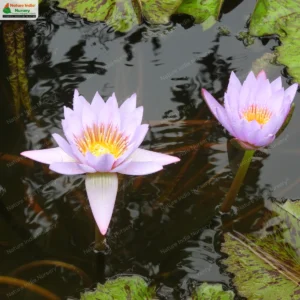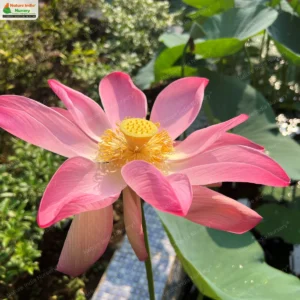
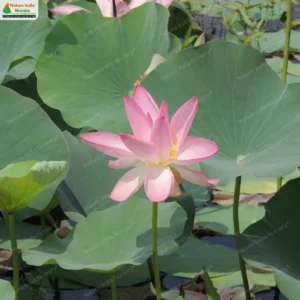




Nelumbo nucifera, commonly known as Lotus, is a perennial aquatic plant belonging to the Nelumbonaceae family. Native to Asia and northern Australia, it is one of the most culturally significant aquatic plants in the region. The species is widely cultivated in ponds, lakes, temple gardens and ornamental water features for its distinctive leaves and beautiful flowers.
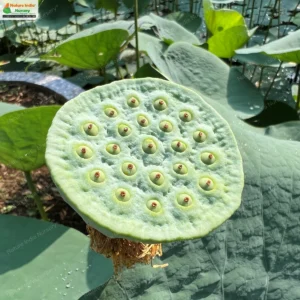
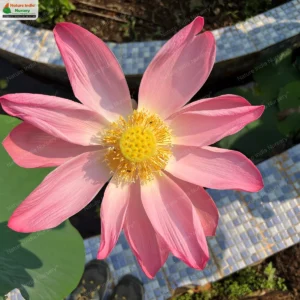
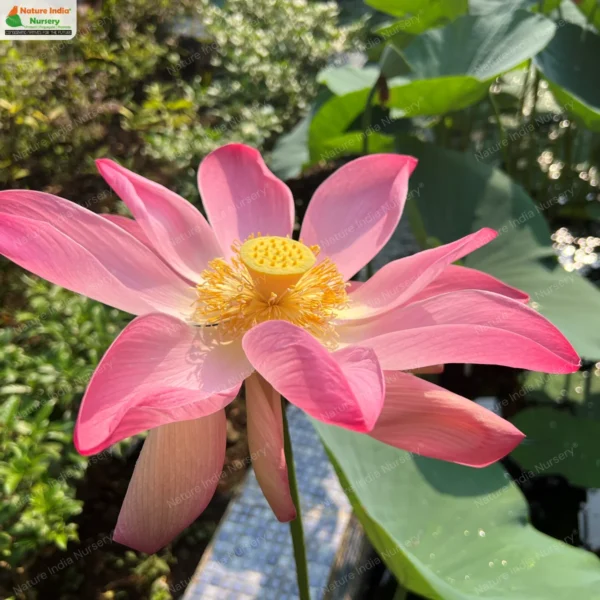
The plant is a rooted aquatic herb with thick underground rhizomes anchored in muddy substrates. Its large, round leaves are held either above or close to the water surface and have a distinctive water-repellent surface. The large flowers are usually pink, rose or white, with numerous petals surrounding a prominent central receptacle. After flowering, the receptacle develops into the characteristic flat-topped lotus seed pod containing numerous seeds.
Habitat
Nelumbo nucifera naturally occurs in shallow freshwater wetlands, ponds, lakes, marshes, slow-moving waterways and seasonally inundated areas. It grows best in warm climates where its rhizomes can remain rooted in nutrient-rich mud beneath relatively shallow water.
Planting and Care
Light: Full sun is essential for vigorous growth and abundant flowering. At least 6–8 hours of direct sunlight is preferable.
Soil: Heavy, fertile clay or loamy aquatic soil rich in organic matter is ideal. The rhizomes should be planted in submerged soil rather than loose floating substrate.
Watering: Maintain a consistent water depth above the growing medium. Water should generally be shallow enough for the leaves and flowers to reach the surface.
Maintenance: Remove old leaves and spent flowers regularly. Control excessive spread when necessary, as rhizomes can expand rapidly in suitable conditions.
Additional Information
Ornamental Use: Lotus is one of the most valued aquatic ornamentals, widely planted in ponds, temple gardens, water landscapes and ornamental pools. Its large flowers and distinctive circular leaves create a strong visual feature.
Ecological Importance: Lotus provides habitat and shelter for aquatic organisms, while its flowers provide nectar and pollen for insects. Its broad leaves can also provide shade over portions of the water surface.
Culinary Importance: Several parts of the plant, including rhizomes, seeds and young seed pods, are used as food in various Asian cuisines. The rhizome is commonly known as lotus root.
Cultural Significance: The lotus has deep cultural and religious importance across South and East Asia. It is strongly associated with purity, beauty, spiritual awakening and auspiciousness in Indian traditions and is widely represented in art, architecture and religious symbolism.
Medicinal Importance: Different parts of lotus have a long history of use in traditional systems of medicine. Traditional applications should n