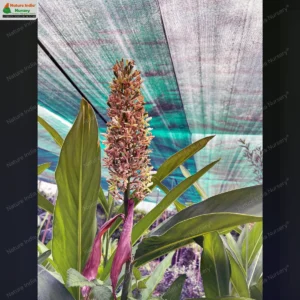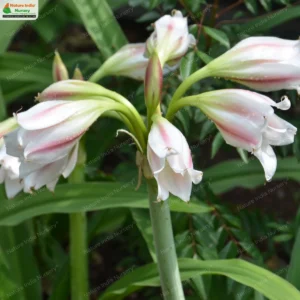
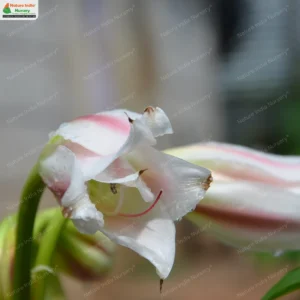
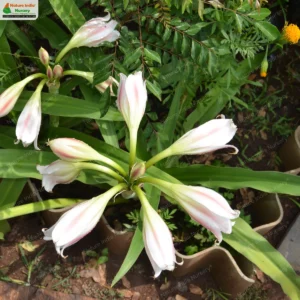
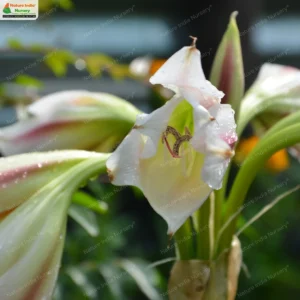
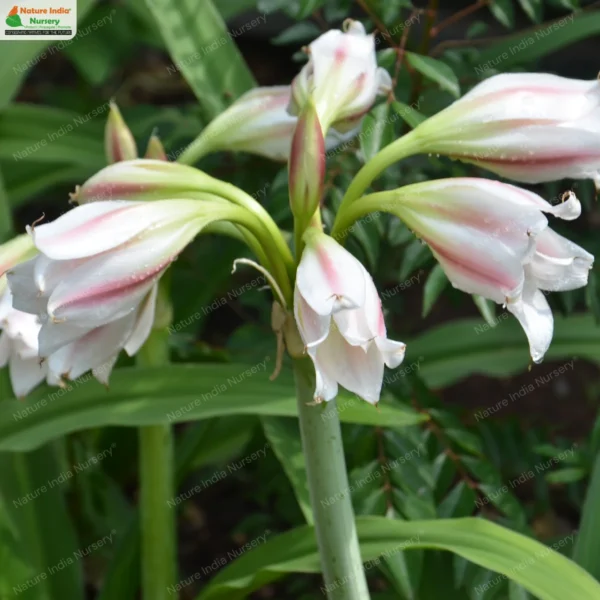


Crinum latifolium, commonly known as Pink-striped Trumpet Lily, is a bulbous perennial herb belonging to the Amaryllidaceae (Amaryllis) family. It is native from India through southern China and Indochina and is primarily associated with wet tropical environments. In India, it is recorded from several states, including Maharashtra, Karnataka, Kerala, Tamil Nadu, Andhra Pradesh and Odisha.
The plant develops from a large underground bulb and produces a rosette of broad, strap-shaped, green leaves. The foliage is generally long and somewhat fleshy, giving the plant a lush appearance. Its attractive flowers are borne on erect flowering stalks and are trumpet-shaped, white to pale pink with distinctive pink or reddish stripes. The flowers are particularly conspicuous against the broad green foliage.
Habitat
Crinum latifolium occurs in tropical moist deciduous forests, along riverbanks, grasslands and rocky slopes. In India, it has been recorded on hills, including exposed rocky and grassy slopes at elevations above about 800 m. It can tolerate sunny sites when sufficient soil moisture is available.
Planting and Care
Light: Prefers full sun to partial shade. Good sunlight encourages flowering, while light shade can be beneficial in very hot climates.
Soil: Grows best in fertile, well-drained soil enriched with organic matter. It can also grow in rocky or moderately sandy soils provided adequate drainage and moisture are available.
Watering: Requires moderate and regular moisture, particularly during active growth and flowering. Avoid prolonged waterlogging around the bulb.
Maintenance: A relatively low-maintenance bulbous plant. Remove dried leaves and spent flower stalks as required. Allow the foliage to remain after flowering so the bulb can replenish its stored reserves.
Additional Information
Ornamental Use: The broad foliage and striking pink-striped trumpet-shaped flowers make it suitable for borders, cottage gardens, rock gardens, naturalistic landscapes and large containers.
Ecological Importance: Its conspicuous flowers provide floral resources for flower-visiting insects and pollinators. As a native bulbous herb, it also contributes to the diversity of tropical grassland and forest-edge vegetation.
Medicinal Importance: Crinum latifolium has a history of use in Ayurvedic and folk medicinal traditions, and several traditional medicinal names are recorded for the species. It contains biologically active alkaloids and other compounds; medicinal use should be distinguished from clinically established therapeutic efficacy.
Special Feature: The species is distinguished by its broad leaves and elegant trumpet-shaped flowers marked with pink stripes, giving rise to the common name Pink-striped Trumpet Lily.
Propagation: Usually propagated through bulb offsets, while seeds can also be used when available.
Flowering and Fruiting: Indian Flora Online records flowering and fruiting from March to July.