
Crinum defixum is a bulbous, perennial flowering herb belonging to the Amaryllidaceae (amaryllis family). It is commonly found in wet tropical habitats, particularly along riverbanks, marshes, and seasonally waterlogged areas. Its attractive flowers and adaptability to moist environments make it a distinctive member of the native wetland flora.
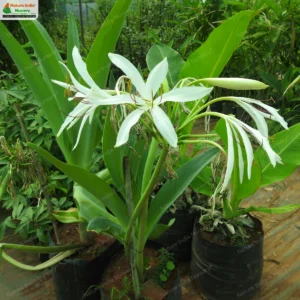
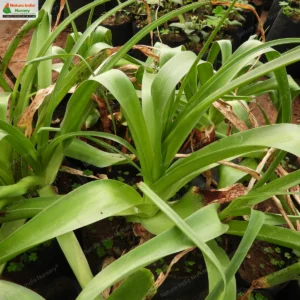
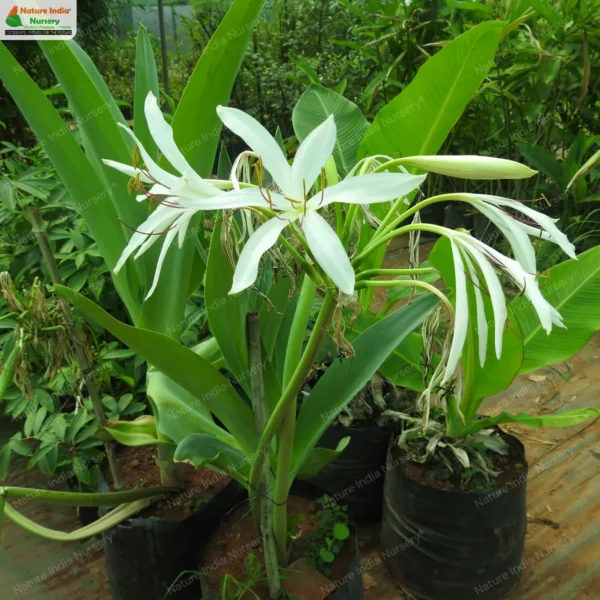
The plant grows from a bulb and produces long, narrow, strap-shaped leaves that emerge from the base. Its flowering stalk bears an umbel of showy, pale flowers, typically white or tinged with pink. The plant may also develop large, fleshy fruits containing seeds. In some populations, small bulbils can form, helping the plant reproduce vegetatively.
Habitat
River Crinum Lily is native to the Indian subcontinent and parts of Indo-China, including India, Sri Lanka, Bangladesh, Myanmar, Thailand, and Vietnam. It is commonly associated with riverbanks, marshes, wet grasslands, and other damp places, and can sometimes grow in shallow water.
Planting and Care
- Light: Full sun to partial shade.
- Soil: Moist, fertile soil rich in organic matter; it can tolerate periodically waterlogged conditions.
- Watering: Keep the soil consistently moist during active growth. It is well suited to rain gardens and pond margins.
- Maintenance: Remove old or damaged leaves and spent flower stalks as needed. Handle the bulbs carefully.
- Propagation: Propagate by separating offsets or bulbils where present, or by sowing mature seeds.
Additional Information
Ornamental Value: Its elegant foliage and showy flowers make it suitable for water gardens, pond edges, and naturalistic wetland planting.
Ecological Importance: It contributes to the diversity of wet habitats and may provide resources for visiting pollinators.
Traditional Significance: The species has been recorded in traditional plant-use references. However, its common name “Poison Bulb” is a reminder that it should not be eaten or used medicinally without qualified guidance; members of this genus may contain biologically active compounds.
Special Feature: Its adaptation to damp soil and marshy environments makes it useful for planting in suitable moist landscapes.