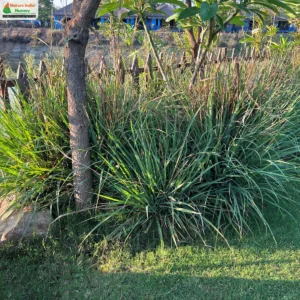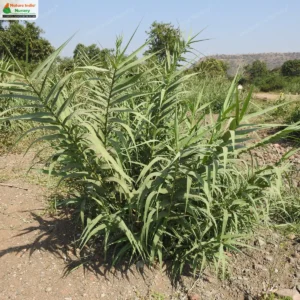
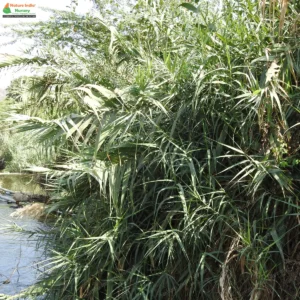

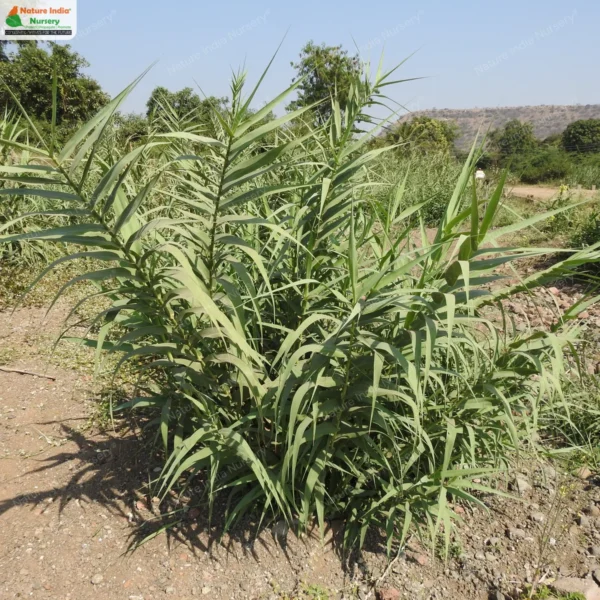


Arundo donax is a tall, robust, perennial grass belonging to the Poaceae (grass) family. It grows in dense clumps from strong underground rhizomes and is commonly found along riverbanks, streams, wetlands, canals, and other moist places. Its impressive height and sturdy, cane-like stems make it useful for traditional crafts, fencing, thatching, and making musical instruments.
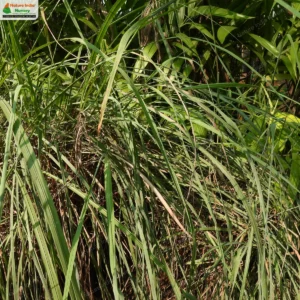
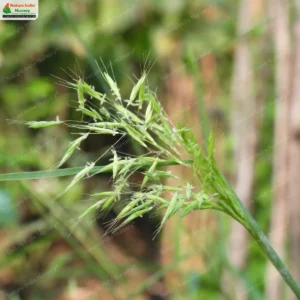
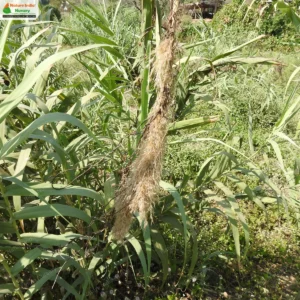
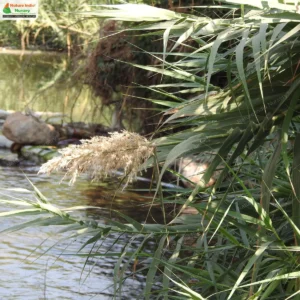
The plant typically reaches 2–8 metres in height. Its stems are thick, hollow, jointed, and cane-like, while the long, narrow leaves have rough edges and arch gracefully outward. Large, feathery flower clusters develop at the tips of mature stems, usually appearing cream, silvery, or purplish.
Habitat
Giant Reed grows naturally across parts of Asia and is established in many other warm regions. It favours moist ground, especially streambanks, river margins, drainage channels, and wetland edges. It can tolerate a range of soil conditions when sufficient moisture is available.
Planting and Care
- Light: Full sun is ideal for vigorous growth.
- Soil: Adaptable to different soils; grows especially well in moist, fertile, well-drained to damp ground.
- Watering: Requires regular moisture for best growth, although established plants can tolerate some dry periods.
- Maintenance: Cut back old stems as needed. Allow ample space because underground rhizomes can spread aggressively.
- Propagation: Usually propagated by rhizome division or rooted stem sections.
Additional Information
Traditional and Practical Uses: The strong stems are used for making reeds for musical instruments, screens, mats, fencing, thatching, and other traditional materials. The plant has also been used as biomass and for erosion control.
Ecological Considerations: Although it can help stabilise moist banks, Giant Reed spreads rapidly through rhizomes and stem fragments. In some regions outside its native range, it becomes invasive, forms dense stands, and increases fire risk. Plant it cautiously near natural waterways and wetlands.
Special Feature: Its towering cane-like stems and large, plume-shaped flower heads give it a distinctive appearance among grasses.
Botanical Note: The accepted scientific name is Arundo donax L. Its precise native range is debated, but Kew’s Plants of the World Online records it across parts of western and central Asia to temperate eastern Asia, including regions of the Indian subcontinent.