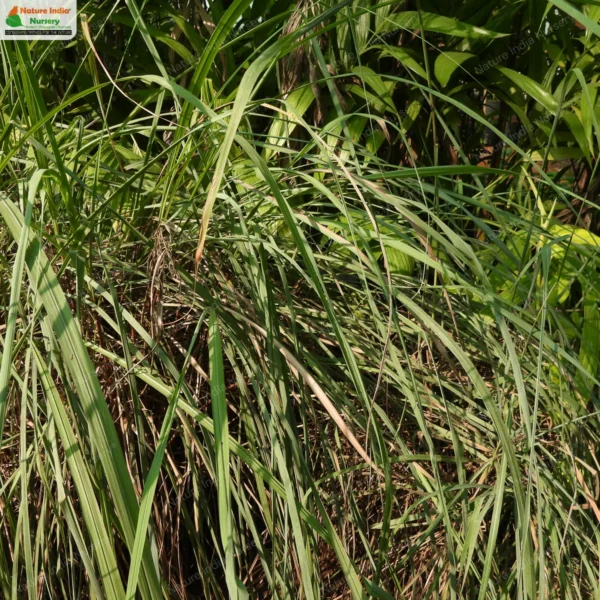

Cymbopogon flexuosus is an aromatic, clump-forming perennial grass belonging to the Poaceae (grass family). Native to the Indian subcontinent and parts of Southeast Asia, it is widely cultivated for its fragrant foliage and essential oil, which is an important raw material for the fragrance, flavouring, and cosmetic industries.
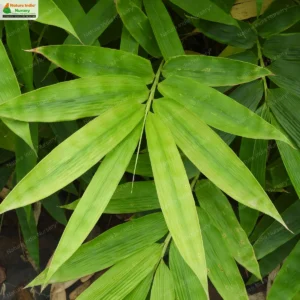
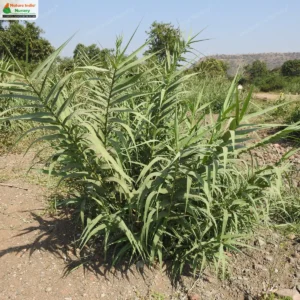
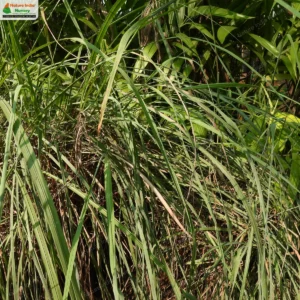
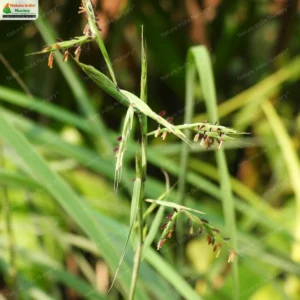
The plant typically grows about 1.5–3 metres tall, forming dense clumps of upright stems and long, narrow, arching leaves. The leaves are green to bluish-green, have rough edges, and release a strong lemon-like aroma when crushed. Some cultivated forms have reddish or purplish leaf sheaths. Flowering occurs in branched clusters, although plants are primarily cultivated for their leaves.
Habitat
Cochin Grass grows in tropical and subtropical climates and is associated with grasslands, open woodland, plains, and seasonally dry tropical habitats. It thrives in warm conditions with good sunlight and adequate moisture. In India, it is cultivated commercially in suitable regions, particularly for essential-oil production.
Planting and Care
- Light: Full sun is ideal for vigorous growth and aromatic foliage.
- Soil: Prefers fertile, well-drained loamy soil, though it can grow in a range of soil types.
- Watering: Water regularly during establishment and dry periods. Avoid prolonged waterlogging.
- Maintenance: Trim old leaves and harvest foliage periodically to encourage fresh growth. Divide crowded clumps when necessary.
- Propagation: Usually propagated by dividing established clumps or planting rooted slips.
Additional Information
Essential Oil: The leaves yield East Indian Lemongrass Oil through steam distillation. The oil is rich in citral, an aromatic compound used in fragrances, soaps, cosmetics, flavourings, and as a raw material in the manufacture of other fragrance compounds.
Commercial Importance: It is an important aromatic crop in India. The harvested grass is distilled for oil, while spent plant material may be composted or used as biomass.
Traditional Uses: The leaves are used in some regional herbal preparations and aromatic infusions. Traditional use does not establish clinical effectiveness, and concentrated essential oil should not be ingested or applied undiluted to the skin.
Environmental Benefits: Its dense root system can help bind soil and reduce erosion when grown in suitable sites.
Special Feature: Compared with Cymbopogon citratus, which is commonly called West Indian Lemongrass, Cymbopogon flexuosus is particularly associated with East Indian Lemongrass Oil production.
Botanical Note: The accepted scientific name is Cymbopogon flexuosus (Nees ex Steud.) Will. Watson. It belongs to the genus Cymbopogon, which includes several aromatic grasses cultivated for essential oils.