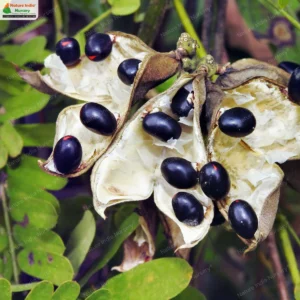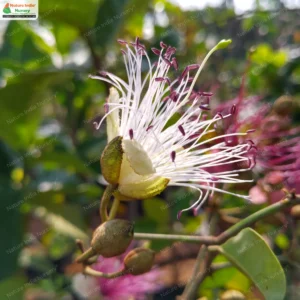
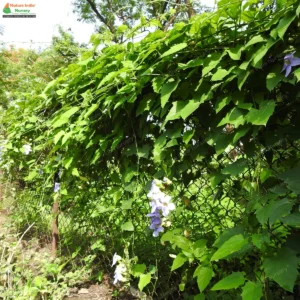
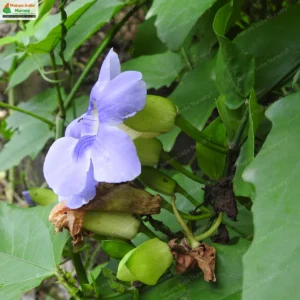
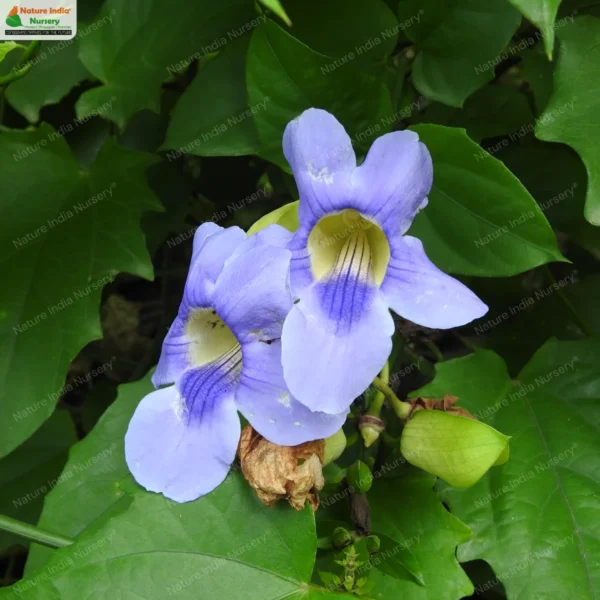


Thunbergia laurifolia, commonly known as Laurel Clock Vine, is a vigorous woody climbing vine belonging to the Acanthaceae family. It is native from northeastern India through Myanmar and mainland Southeast Asia to Peninsular Malaysia, and is widely cultivated as an ornamental climber in tropical regions.
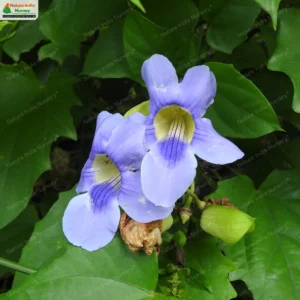
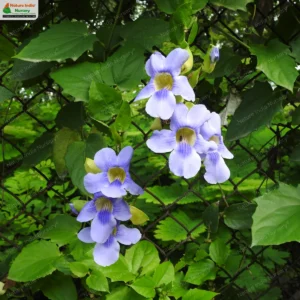
The plant is a fast-growing, twining climber that can reach 12 m or more under favourable conditions. It has opposite, glossy, laurel-like leaves and produces hanging racemes bearing attractive lavender-blue to blue flowers, often with a yellowish throat. White-flowered forms can also occur. Its long, pendulous flower clusters make it particularly striking when trained over a pergola or trellis.
Habitat
Thunbergia laurifolia naturally grows in moist tropical forests, often climbing on trees and occurring in humid, low-elevation environments. In India, it has been recorded from the Andaman and Nicobar Islands, Assam, and Maharashtra, including Lonavala. India Flora Online records flowering and fruiting mainly from October to February in its Indian distribution.
Planting and Care
Light: Prefers full sun to bright partial shade. Good light encourages vigorous growth and flowering.
Soil: Grow in fertile, slightly acidic, organic-rich and freely draining soil.
Watering: Provide regular moisture during active growth, particularly in warm and dry periods. Avoid prolonged waterlogging.
Support: Provide a strong trellis, pergola, arch, fence, or other sturdy support because the vine is exceptionally vigorous.
Maintenance: Regular pruning is important to control its size, encourage branching, and maintain a manageable shape. In suitable tropical climates, hard annual pruning may be required.
Additional Information
Ornamental Use: An excellent flowering climber for pergolas, arches, trellises, fences, screens, and large tropical gardens. Its long hanging racemes and glossy foliage create a dramatic vertical display.
Ecological Importance: The flowers provide floral resources for insects and other flower-visiting organisms. In regions where it has been introduced, however, its vigorous growth can allow it to smother native vegetation; it is considered invasive in some tropical regions, including parts of Australia.
Medicinal and Cultural Significance: In Thailand and Malaysia, the leaves are traditionally used to prepare herbal tea and have been used in traditional practices associated with detoxification and treatment of poisoning. These are traditional uses and should not be interpreted as established clinical treatments.
Special Feature: The specific epithet laurifolia refers to its laurel-like leaves. The species is distinguished from the closely related Thunbergia grandiflora by its generally longer, narrower leaves and hairless young stems and leaves.
Propagation: Propagation can be carried out through seeds, stem cuttings, or root cuttings.
Flowering and Fruiting: In India, flowering and fruiting are recorded mainly from October to February. Under suitable tropical cultivation, flowering can occur over a much longer period.
Taxonomic Note: Thunbergia laurifolia Lindl. is the currently accepted name. Thunbergia grandiflora var. laurifolia is a synonym.