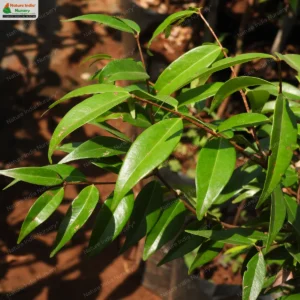
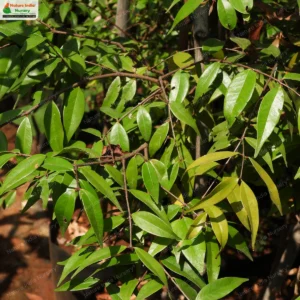
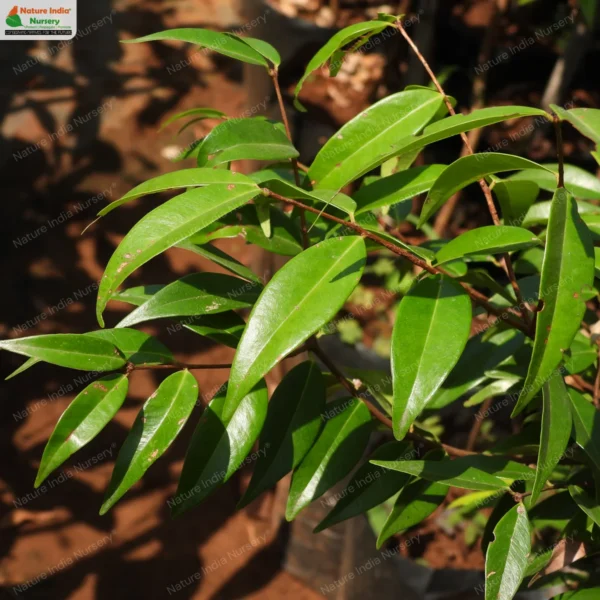

Syzygium zeylanicum (L.) DC. belongs to the family Myrtaceae, the myrtle family, which includes many aromatic trees and shrubs. It is a widely distributed tropical species native to the Indian subcontinent, Sri Lanka, Madagascar, southern China and parts of Southeast Asia. In India, it is found in several regions, including the Western Ghats. It grows as a large shrub or small to medium-sized evergreen tree, reaching approximately 10–15 m in height. The bark is dark to pale brown, sometimes with a reddish tinge. Its leaves are simple, opposite, leathery and glossy, varying from elliptic and lance-shaped to ovate, with prominent lateral veins and translucent oil glands. Small white flowers are borne in axillary or terminal clusters. The fruit is a small, rounded, fleshy berry, typically whitish when ripe, and is reported as edible.
Habitat
The species commonly occurs along stream and riverbanks in tropical evergreen forests. It is also found in scrub jungles, mixed deciduous forests and other moist tropical habitats. It grows across a broad range of tropical Asia and is recorded from different parts of peninsular India.
Planting and Care
- Light: Grows in open locations and partial shade; young plants benefit from some protection from intense afternoon sun.
- Soil: Prefers moist, well-drained soil enriched with organic matter.
- Watering: Maintain consistent soil moisture, particularly during establishment. Avoid prolonged waterlogging.
- Climate: Suited to warm, humid tropical and subtropical climates.
- Maintenance: Generally requires limited pruning. Remove dead or damaged branches and maintain organic mulch around the root zone.
- Propagation: Propagated primarily through seeds. Fresh seeds are preferable, and seedlings should be kept moist during early growth.
Additional Information
- Edible fruit: The small, whitish, rounded berries are reported to be edible and are locally gathered in some regions.
- Traditional importance: The bark has been reported as a source of black dye in traditional use.
- Ecological value: Its flowers and fruits contribute to the resources available to insects and fruit-eating wildlife in tropical forest habitats.
- Flowering and fruiting: Flowering is reported mainly from January to May in parts of peninsular India, although the season varies geographically.
- Identification: The glossy opposite leaves, small white flowers and distinctive whitish globose berries are useful identification features.