
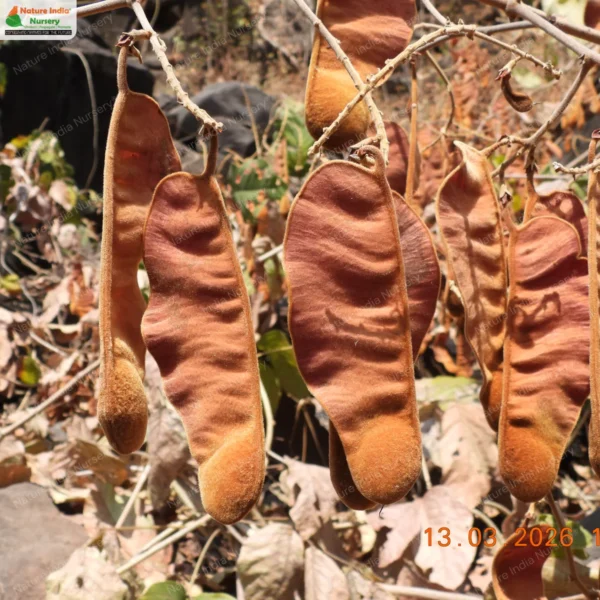


Spatholobus parviflorus, commonly known as Palas-Climber, is a large, woody perennial climber belonging to the Fabaceae (legume) family. It is native to the Indian Subcontinent and parts of Southeast Asia, where it occurs mainly in tropical and subtropical forests.
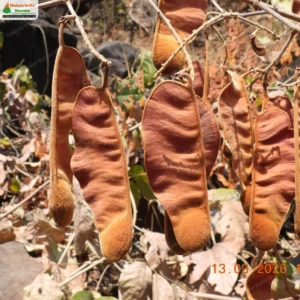
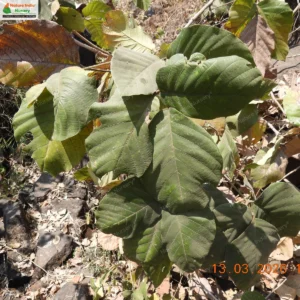
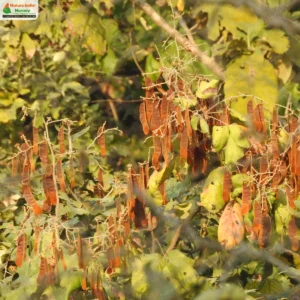
The plant develops long, vigorous, woody stems that climb over shrubs and trees. Its leaves are trifoliolate, with three broadly ovate to elliptic leaflets, often with a leathery texture. Small cream, yellowish or reddish flowers are produced in elongated, branched inflorescences. The fruits are flattened, one-seeded to few-seeded legumes that mature from green to brown.
Habitat
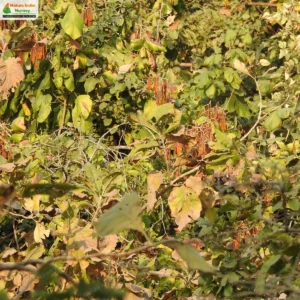
Spatholobus parviflorus occurs in tropical evergreen, semi-evergreen and moist deciduous forests, forest margins, thickets and wooded hill slopes. It is particularly associated with warm, humid environments and can form extensive growth through surrounding vegetation.
Planting and Care
Light: Full sun to partial shade. Bright filtered light is particularly suitable for young plants.
Soil: Deep, fertile, organic-rich and well-drained soil with good moisture retention.
Watering: Moderate to regular watering during establishment. Once established, it can tolerate some seasonal dryness but performs best with adequate moisture during active growth.
Maintenance: Provide a strong trellis, pergola or sturdy tree for support. Prune periodically to control its vigorous growth and remove old or damaged stems.
Additional Information
Ornamental Use: Its vigorous climbing habit and attractive foliage make it suitable for large tropical gardens, pergolas, naturalistic landscapes and botanical collections where sufficient space and structural support are available.
Ecological Importance: As a native forest climber, it contributes to the structure of woodland vegetation and provides shelter and resources for insects and other organisms.
Traditional Importance: Spatholobus species have a history of use in traditional medicine and local ethnobotanical practices. Uses attributed to the plant should be regarded as traditional knowledge rather than established clinical evidence.
Special Feature: The species is characterized by its vigorous woody climbing habit and trifoliolate leaves, allowing it to spread through the canopy and surrounding vegetation.
Propagation: Primarily propagated by seeds. Mature seeds can be sown in a well-drained, moisture-retentive growing medium. Suitable vegetative methods may also be used when planting material is available.
Flowering and Fruiting: Flowering is generally associated with the warmer or wetter part of the year, followed by the development of flattened leguminous pods. The exact flowering and fruiting period varies with locality.
Regional Names: मालिनी (Malini) and पळशीन (Palashin) are regional names associated with this species.
Taxonomic Note: Spatholobus parviflorus (Roxb. ex DC.) Kuntze is a member of the Fabaceae family. The genus Spatholobus contains several closely related woody climbers, so accurate identification is important when using regional names.


