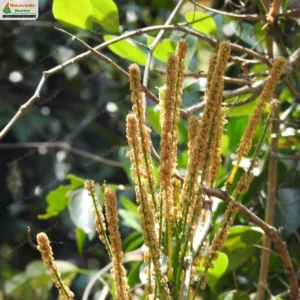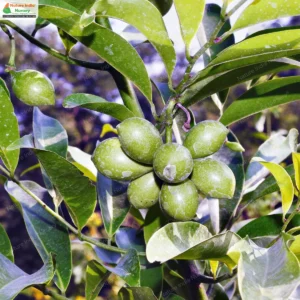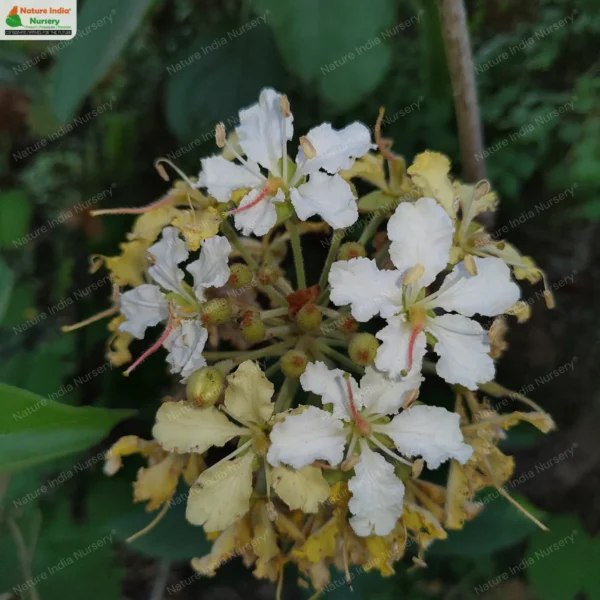
Phanera vahlii, commonly known as Maloo Creeper, is a large, vigorous woody climber or liana belonging to the Fabaceae (legume) family. It is native to the Indian Subcontinent, including India, Nepal, Bhutan and the Himalayan regions, and is particularly associated with seasonally dry tropical forests. The species is also widely known under the older name Bauhinia vahlii.
The plant develops long, woody, branching stems that can climb extensively into surrounding vegetation. Its large, distinctive leaves are two-lobed, resembling the leaves of other Bauhinia species. The young branches and lower surfaces of the leaves may be hairy. Its flowers are white when fresh and gradually become cream or yellowish with age, while the fruits develop as large, flat, woody pods covered with fine rusty hairs.
Habitat
Maloo Creeper occurs naturally in mixed deciduous and Sal forests, woodland and seasonally dry tropical habitats. Its native distribution extends across much of the Indian Subcontinent, including the Himalayas and parts of central and peninsular India.
Planting and Care
Light: Full sun to partial shade. It grows vigorously where it receives good light and adequate space to climb.
Soil: Deep, fertile, well-drained soil with moderate organic matter.
Watering: Moderate watering during establishment; once established, it can tolerate seasonal dryness.
Maintenance: Provide a strong trellis or large support structure. Regular pruning may be necessary to control its vigorous growth and prevent it from overwhelming nearby trees or plants.
Additional Information
Ornamental Use: Its enormous foliage, vigorous climbing habit and attractive white-to-cream flowers make it suitable for large tropical landscapes, botanical gardens, pergolas and naturalistic plantings where ample space is available.
Ecological Importance: The dense growth of this liana contributes to forest structure and provides cover for wildlife. In natural forests it can climb extensively over trees and form dense vegetation.
Food and Traditional Use: The seeds are traditionally used as food by some tribal communities, with the pods opened using heat to obtain the seeds. Such traditional food use should not be taken as a recommendation for consumption without appropriate preparation and local knowledge.
Special Feature: It is one of the largest and most vigorous native climbers of the Indian Subcontinent, with stems capable of reaching many metres in length. Its large, deeply two-lobed leaves and long woody pods are characteristic features.
Propagation: Primarily propagated by seeds. Mature seeds can be collected from fully developed pods and sown in a well-drained growing medium.
Flowering and Fruiting: Flowers and fruits have been recorded throughout the year in some parts of its range, while regional observations commonly report prominent flowering during the warmer months.
Regional Names: Marathi names include चांबुळी (Chambuli), चामूळ (Chamul), कांचनवेल (Kanchanvel), and माउल (Maaul). Hindi names include मालू (Malu), टौर (Taur), मालझन (Maljhan), माहुल (Mahul), and मलायु (Malayū).
Taxonomic Note: The currently accepted name is Phanera vahlii (Wight & Arn.) Benth.; Bauhinia vahlii and Bauhinia racemosa are recorded as synonyms in modern taxonomic databases.