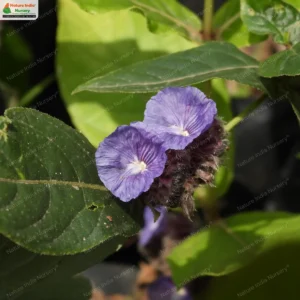
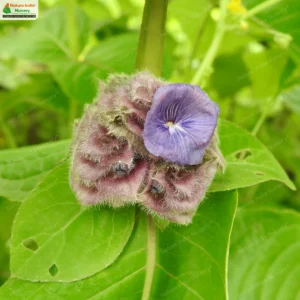
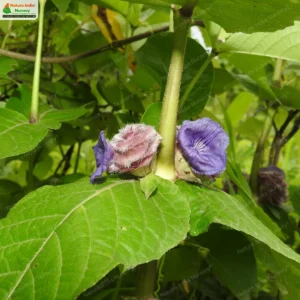

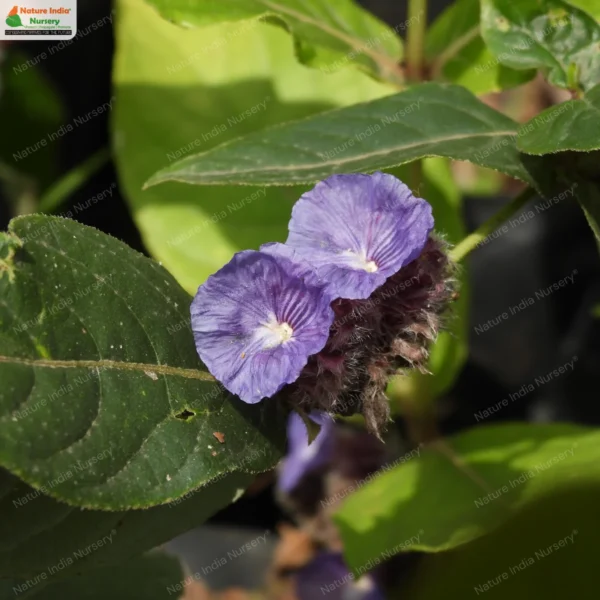


Neuracanthus sphaerostachyus, commonly known as Pin Cushion Plant, is an erect herb belonging to the Acanthaceae (acanthus) family. It is native to western and southern India and is characteristic of seasonally dry tropical environments. The species is particularly recognizable for its rounded, compact flower heads and violet-purple flowers.
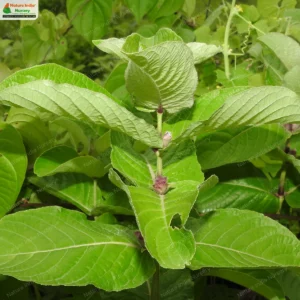
The plant is generally an erect herb about 30–60 cm tall, with opposite, elliptic-oblong leaves that are nearly sessile. The attractive violet to purple flowers are densely arranged in rounded, spherical clusters, giving the inflorescences their characteristic pincushion-like appearance.
Habitat
Neuracanthus sphaerostachyus is native to western and southern India, with records from Maharashtra, Karnataka, Gujarat, Goa and adjoining regions. It is generally associated with seasonally dry tropical vegetation, open woodland, scrub, grassland and dry forest margins.
Planting and Care
Light: Full sun to partial shade. Good sunlight encourages compact growth and flowering.
Soil: Well-drained, moderately fertile soil. It can perform well in lighter soils typical of dry and seasonal landscapes.
Watering: Moderate watering during active growth. Once established, avoid keeping the soil continuously wet.
Maintenance: Remove dry stems after flowering and maintain adequate spacing to encourage healthy, bushy growth. Excessive watering should be avoided, particularly during the dormant or dry season.
Additional Information
Ornamental Use: The compact growth habit and distinctive rounded violet-purple flower heads make it suitable for native plant gardens, rock gardens, dry landscapes and biodiversity-oriented planting.
Ecological Importance: Its flowers provide floral resources for insects and contribute to the biodiversity of seasonally dry habitats.
Special Feature: The spherical flower clusters are the most distinctive feature of the species. The epithet sphaerostachyus refers to its rounded or spherical flower spikes and is closely associated with its pincushion-like appearance.
Cultural Significance: The Hindi name पुतलियो (Putliyo) and the Marathi name गोलगोंडा (Golgonda) are documented vernacular names. The Marathi name गोलगोंडा is particularly associated with the rounded flower heads.
Traditional Use: Kew’s Medicinal Plant Names Services records traditional medicinal references for the species, including use of the root in Indian medicinal sources. Such traditional uses should not be interpreted as established clinical efficacy.
Propagation: Propagation can be carried out through seeds. Seed-grown plants should be established in a well-drained medium and protected from excessive moisture during early growth.
Flowering and Fruiting: In Indian botanical records, flowering and fruiting are reported mainly from August to December.
Taxonomic Note: The currently accepted name is Neuracanthus sphaerostachyus (Nees) Dalzell. Lepidagathis sphaerostachya Nees and Neuracanthus lawii Wight are treated as synonyms.
Conservation Significance: Kew’s 2024 Angiosperm Extinction Risk Predictions identify the species as predicted to be threatened, although this is a prediction rather than an IUCN Red List assessment.