
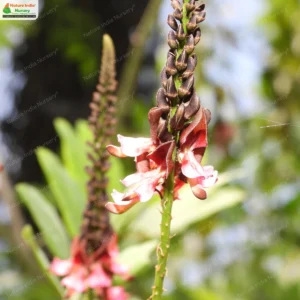
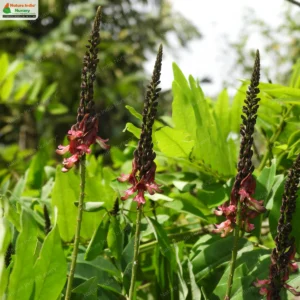
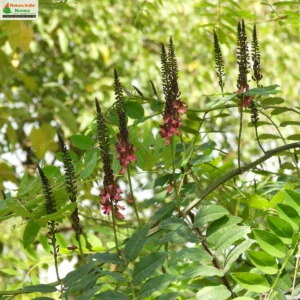
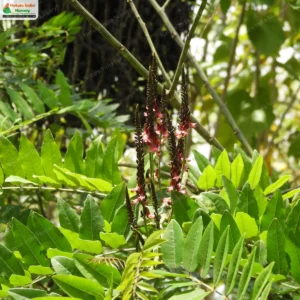
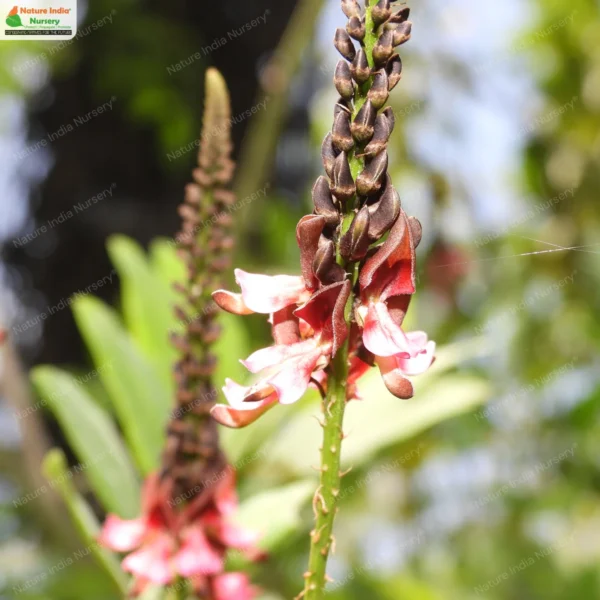


Indigofera zollingeriana, commonly known as Long-Spike Indigo or Assam Shade, is a small tree or shrub belonging to the Fabaceae (pea) family. It is native from Assam through parts of South and Southeast Asia and is also cultivated in several regions. The species is recognized for its graceful branching habit, pinnate foliage, and elongated racemes of pinkish flowers.
The plant typically grows about 1–3 m tall, developing horizontal to somewhat drooping branches. Its leaves are odd-pinnate, usually bearing numerous lance-shaped leaflets with pointed tips. The flowers are pinkish and arranged in elongated racemes, followed by straight, cylindrical, brownish hairy pods containing small, disc-shaped brown seeds.
Habitat
Indigofera zollingeriana occurs naturally from Assam to southern China, mainland Southeast Asia, the Philippines, Borneo and nearby regions. It is primarily associated with subtropical environments. In India it is also cultivated and may occasionally occur as an escape from cultivation.
Planting and Care
Light: Full sun to partial shade; good sunlight encourages healthy growth and flowering.
Soil: Fertile, well-drained soil enriched with organic matter. It can tolerate a range of garden soils provided they do not remain waterlogged.
Watering: Moderate watering during active growth. Allow the soil to drain between waterings once the plant is established.
Maintenance: Prune lightly after flowering to maintain a compact form and encourage branching. Provide adequate space for its spreading, somewhat drooping branches.
Additional Information
Ornamental Use: Its attractive pinnate foliage, graceful branching, and long pinkish flower racemes make it suitable as a small ornamental tree, avenue plant, or garden specimen.
Ecological Importance: As a member of the Fabaceae, it contributes to legume diversity and can form part of subtropical vegetation. Its flowers may also provide resources for insects.
Special Feature: The species is particularly notable for its long, densely flowered racemes and distinctive horizontal or drooping branches.
Propagation: Propagation is generally possible from seeds. Fresh, healthy seeds and warm conditions can improve germination.
Flowering and Fruiting: In Indian records, flowering and fruiting have been documented mainly during September–October. The fruits are straight, cylindrical pods that become brownish and hairy as they mature.
Taxonomic Note: Indigofera zollingeriana Miq. is the currently accepted name. Indigofera teysmannii and Indigofera benthamiana are among the names treated as synonyms.