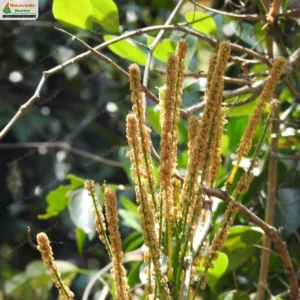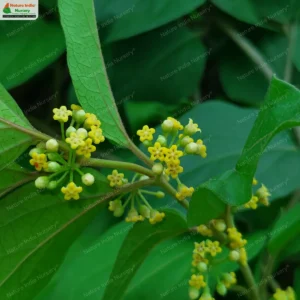


Gymnema sylvestre, commonly known as Cowplant, is a perennial woody climber belonging to the Apocynaceae family. It is native to tropical and subtropical regions of India and extends through parts of Southeast Asia, China, and Africa. The plant is particularly well known in traditional Indian medicine and is valued for its characteristic leaves and long history of traditional use.
The plant is a woody, twining climber with slender stems and opposite, simple leaves. The leaves are typically ovate to elliptic, with a somewhat leathery texture. Small, greenish-yellow flowers are produced in clusters, followed by slender paired follicles containing numerous seeds with silky hairs that aid dispersal.
Habitat
Gymnema sylvestre occurs naturally in tropical dry and moist deciduous forests, scrublands, forest margins, and woodland areas. It can grow in both relatively open and partially shaded habitats and is often found climbing over shrubs and small trees.
Planting and Care
Light: Full sun to partial shade. Good light encourages healthy foliage and flowering.
Soil: Prefers fertile, well-drained soil with moderate organic matter. It can tolerate a range of soil types when drainage is adequate.
Watering: Provide moderate and regular watering during establishment and active growth. Allow the soil to dry slightly between waterings once the plant is established.
Maintenance: Provide a trellis, fence, or other support for the twining stems. Occasional pruning helps control the climber and encourages fresh growth.
Additional Information
Traditional Medicinal Importance: Gymnema sylvestre has a long history of use in Ayurveda and other traditional systems of medicine, particularly in preparations associated with blood sugar and metabolic health. Its leaves contain gymnemic acids, compounds known to temporarily reduce the perception of sweetness. Traditional use should not be interpreted as proof that the plant can replace prescribed medical treatment.
Special Feature: Chewing the leaves can temporarily reduce or suppress the sensation of sweetness, a distinctive characteristic that has contributed to traditional names such as Gurmar, meaning “sugar destroyer.”
Ecological Importance: As a native forest climber, the plant contributes to the structural diversity of tropical vegetation and provides additional habitat within shrub and woodland layers.
Ornamental Use: Its attractive foliage and climbing habit make it suitable for native plant gardens, herbal gardens, trellises, and botanical collections.
Propagation: Commonly propagated by seeds or stem cuttings. Healthy semi-mature cuttings can be rooted under warm, humid conditions.
Flowering and Fruiting: Flowering generally occurs during the rainy season, with small flowers followed by paired elongated follicles containing silky-haired seeds.
Cultural Significance: The plant is widely recognized in India by vernacular names such as गुड़मार (Gurmar) and मधुनाशिनी (Madhunashini), reflecting its longstanding association with traditional herbal practices.