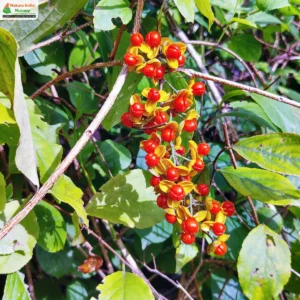
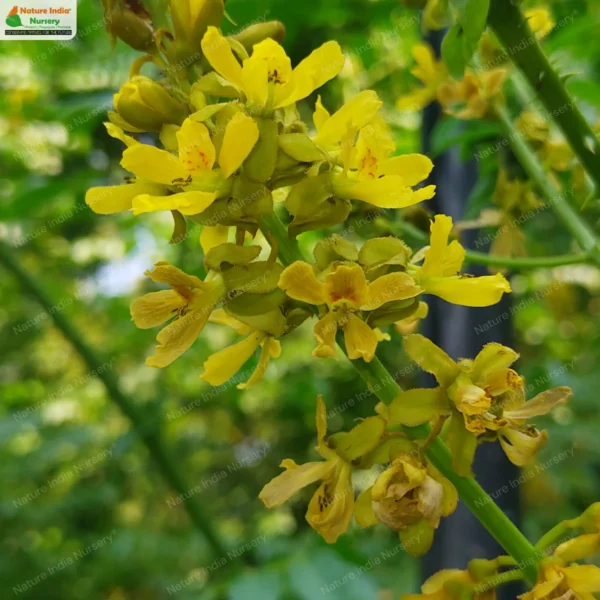


Guilandina bonduc, commonly known as Fever Nut, is a prickly, scrambling shrub or woody climber belonging to the Fabaceae family. It is widely distributed throughout tropical coastal regions of Asia, Africa, Australia, and the Pacific. The species is particularly characteristic of sandy coastal habitats, where its sprawling stems and extensive root system allow it to tolerate exposed conditions.
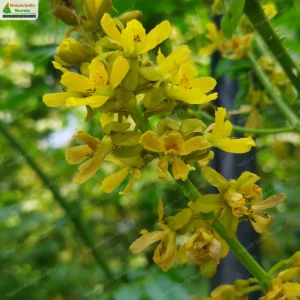
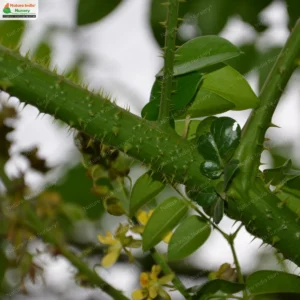
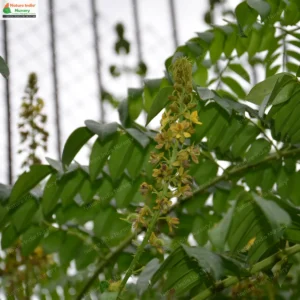
The plant has long, trailing or climbing stems covered with sharp recurved prickles. Its leaves are large and bipinnate, composed of numerous small leaflets. The attractive yellow flowers are borne in elongated racemes, often marked with reddish or orange colouring. These are followed by distinctive, prickly seed pods containing hard, rounded greyish-brown seeds commonly known as fever nuts.
Habitat
Guilandina bonduc is primarily associated with tropical coastal habitats, including sandy beaches, sand dunes, coastal scrub, open woodland, and disturbed areas near the sea. It is well adapted to saline winds, sandy soils, and strong sunlight.
Planting and Care
Light: Full sun is ideal for vigorous growth and flowering.
Soil: Prefers sandy, well-drained soils and can tolerate relatively poor coastal soils.
Watering: Moderate watering is sufficient once established. Avoid prolonged waterlogging.
Maintenance: Provide ample space for its sprawling growth. Pruning may be necessary to control the thorny stems, particularly in gardens or public landscapes. Handle the plant carefully because of its numerous prickles.
Additional Information
Ornamental Use: The yellow flowers, unusual seed pods, and distinctive foliage can provide seasonal interest in large native or coastal gardens. Because of its thorny and spreading nature, it is better suited to locations where it can grow without interfering with pathways.
Ecological Importance: The dense, scrambling growth helps provide ground cover and contributes to the stabilization of sandy coastal habitats. Its seeds can also be dispersed by water, allowing the species to colonize coastal environments.
Traditional and Medicinal Importance: The seeds and other parts of the plant have a long history of use in Ayurvedic and other traditional medicinal systems, including preparations traditionally associated with fever, inflammation, and various other ailments. These are traditional uses and should not be interpreted as established clinical treatments.
Special Feature: The plant produces exceptionally hard, rounded seeds enclosed in prickly pods. The seeds are often called fever nuts and can remain viable after dispersal in coastal environments.
Propagation: Primarily propagated from seeds. The hard seed coat can make germination slow or irregular; suitable seed-treatment techniques can improve germination.
Flowering and Fruiting: Flowering generally occurs during the warm and rainy season, followed by the development of the characteristic prickly pods and hard seeds.
Coastal Adaptation: Its tolerance of sandy soils, salt-laden coastal winds, drought periods, and intense sunlight makes it particularly well adapted to tropical coastal landscapes.