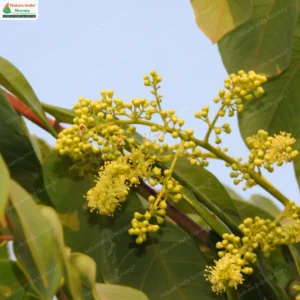
Ficus dalhousiae, commonly known as Dalhousiae’s Fig, is a species of tree belonging to the Moraceae family. Native and endemic to southern India, particularly the Western Ghats, this relatively rare fig is valued for its distinctive foliage and its role in native forest ecosystems.
The species is a small to medium-sized evergreen tree that can grow up to 10 meters in height and may occasionally grow as an epiphyte. It has large, leathery, ovate to ovate-oblong leaves with a deeply heart-shaped base and prominent veins. The plant produces paired fig-like fruits, which turn yellow when mature.
Habitat
Ficus dalhousiae is primarily found in dry and moist deciduous forests of southern India, particularly in the southern Western Ghats. It has also been recorded along stream banks and rocky slopes, from low elevations up to around 1,300 meters.
Planting and Care
Light: Prefers full sun to partial shade. In cultivation, bright filtered light is suitable, particularly when grown in warmer climates.
Soil: Requires well-drained, fertile soil with good organic content. Soil that retains moderate moisture while allowing excess water to drain is ideal.
Watering: Requires regular watering during establishment. Once established, watering can be reduced, particularly during cooler or wetter periods.
Maintenance: Requires relatively low maintenance when grown in suitable conditions. Pruning may be carried out to remove damaged branches and maintain the desired shape. Propagation can be carried out through seeds or suitable vegetative methods.
Additional Information
Ornamental Use: Ficus dalhousiae can be cultivated in spacious native-plant gardens, botanical collections, and conservation landscapes for its large, distinctive leaves and unusual fig fruits.
Ecological Importance: Like other Ficus species, it contributes to forest food webs through its fruit production. Fig trees also have specialized relationships with fig wasps that are important for pollination and reproduction.
Conservation Significance: Ficus dalhousiae is endemic to southern India and is considered a rare species in parts of its natural range. A 2023 assessment reported it as Vulnerable (VU), citing its restricted distribution and ongoing habitat decline.