
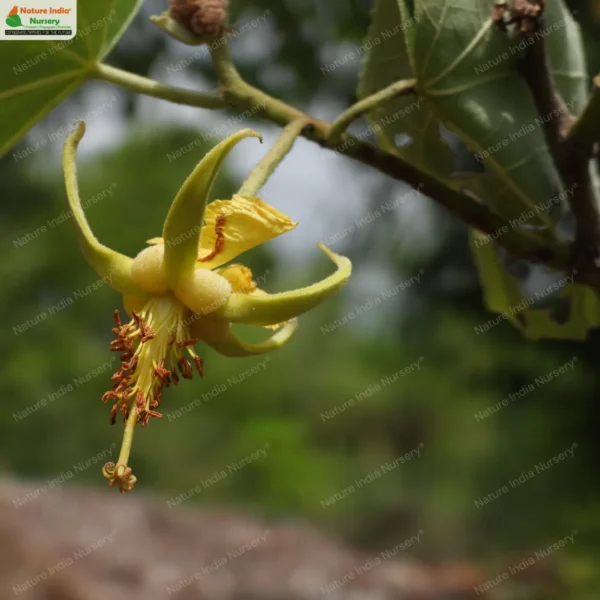


Eriolaena hookeriana, commonly referred to by its scientific name, is a small to medium-sized deciduous tree belonging to the Malvaceae family. Native to India and Sri Lanka, it is a characteristic species of seasonally dry tropical forests and is valued for its yellow flowers and ecological importance.
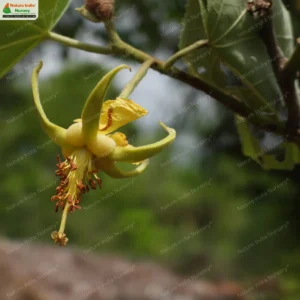
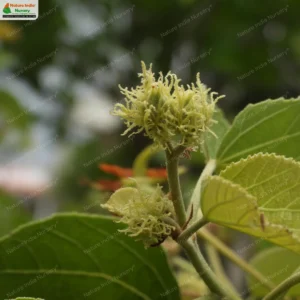
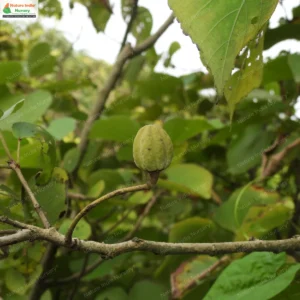
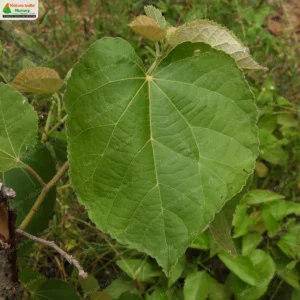
The tree can grow to approximately 8 m tall. Its young branches are covered with fine, star-shaped hairs, while its broad, ovate to heart-shaped leaves have toothed margins and prominent veins. The undersides of the leaves are often densely hairy. Yellow flowers appear in small clusters near the leaf axils, followed by distinctive hard, woody capsules containing seeds.
Habitat
Eriolaena hookeriana grows in deciduous and mixed forests, particularly on open or cleared slopes and in seasonally dry environments. It has been recorded in several parts of India, including Maharashtra, Gujarat, Rajasthan, Madhya Pradesh, Odisha, Andhra Pradesh, and Tamil Nadu, as well as Sri Lanka. It occurs in some forest habitats at elevations of up to approximately 1,000 m.
Planting and Care
Light: Prefers full sunlight and is well suited to open landscapes.
Soil: Grows in well-drained soil and can tolerate the relatively dry conditions found in seasonal forests.
Watering: Water regularly while young and becoming established. Once established, it is adapted to seasonal dry periods.
Maintenance: Requires relatively little maintenance after establishment. Allow sufficient space for its natural tree form and avoid persistent waterlogging.
Planting Location: Suitable for native tree gardens, restoration projects, and large landscapes that can accommodate a deciduous tree.
Additional Information
Ornamental Use: Its yellow flowers and broad foliage make it a useful native tree for botanical gardens, naturalistic landscapes, and native-plant collections.
Ecological Importance: Botanical references identify its flowers as an important source of nectar for pollinators, including bees and other flower-visiting insects.
Special Feature: The tree is distinguished by its hairy, broad leaves, yellow flowers, and hard, woody capsules that split into multiple sections when mature.
Traditional Uses: Some regional ethnobotanical references report uses of the plant for fibre, rope, and traditional remedies. Such reports document traditional practices and do not establish clinical effectiveness.
Propagation: Primarily propagated by seeds. Seedlings can be raised in a well-drained nursery medium and transplanted once sufficiently established.
Flowering and Fruiting: Flowering and fruiting periods vary by region. Indian botanical records report flowering during different parts of the year, with some regional floras recording the main season around February–May.