Diospyros ebenum is a slow-growing evergreen tree belonging to the family Ebenaceae. It is native to southern India, Sri Lanka and the Andaman and Nicobar Islands. Known for its exceptionally hard, dense and dark heartwood, it is one of the important sources of genuine black ebony timber. The tree can grow up to about 30 metres tall, with a straight trunk and a rounded crown.
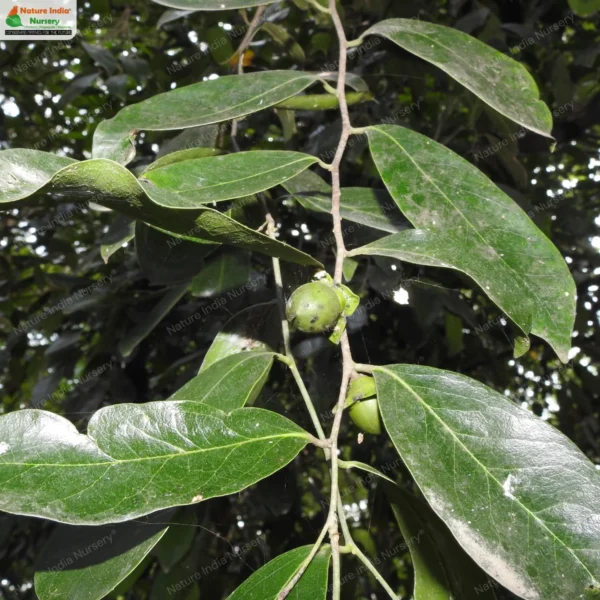
Its bark is dark grey to almost black, rough and fissured with age. The leaves are simple, alternate, leathery and elliptic to oblong, with smooth margins and a glossy green surface. The tree is generally dioecious, meaning male and female flowers occur on separate trees. Its small, greenish-yellow flowers develop in the leaf axils. The fruit is a fleshy, rounded berry that becomes yellowish when mature and contains several seeds.
Habitat
Diospyros ebenum occurs in tropical evergreen and deciduous forests of southern India and Sri Lanka. It is also recorded from the Andaman and Nicobar Islands. It grows in well-drained soils, including rocky and sandy-loam soils, and is found in some forest areas at elevations of around 700–900 metres.
Planting and Care
Light: Prefers full sunlight for healthy growth, although young plants can tolerate partial shade.
Soil: Grows best in deep, fertile, well-drained soil. It can also grow in sandy-loam and rocky soils.
Watering: Requires regular watering during the early stages of growth. Once established, it can tolerate some seasonal dryness.
Climate: Suited to warm tropical climates with seasonal rainfall.
Maintenance: A slow-growing tree that requires patience and adequate space. Protect young plants from grazing and mechanical damage.
Propagation: Commonly propagated through seeds. Fresh, healthy seeds are recommended for better germination.
Additional Information
- Timber Value: Its heartwood is characteristically dark brown to jet black, extremely hard, heavy and durable. It is prized for fine furniture, decorative carvings, musical instruments, chess pieces and other specialised woodwork.
- Wood Characteristics: The heartwood is often distinctly darker than the pale sapwood and can develop a fine, attractive polish.
- Ecological Importance: Its flowers provide resources for insects, while its fruits are consumed by wildlife.
- Flowering and Fruiting: Indian botanical records report flowering and fruiting mainly from February to August, although timing varies across its range.
- Conservation: Because of its valuable timber and slow growth, the species is vulnerable to pressure from unsustainable harvesting. Protection of natural populations and responsible timber management are important.