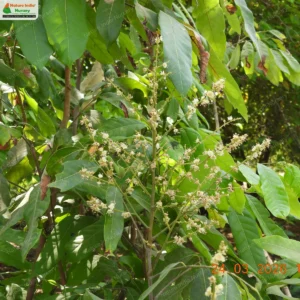
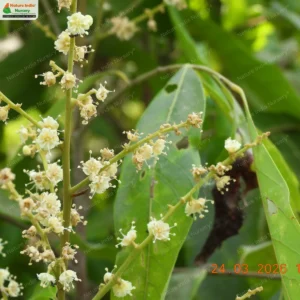
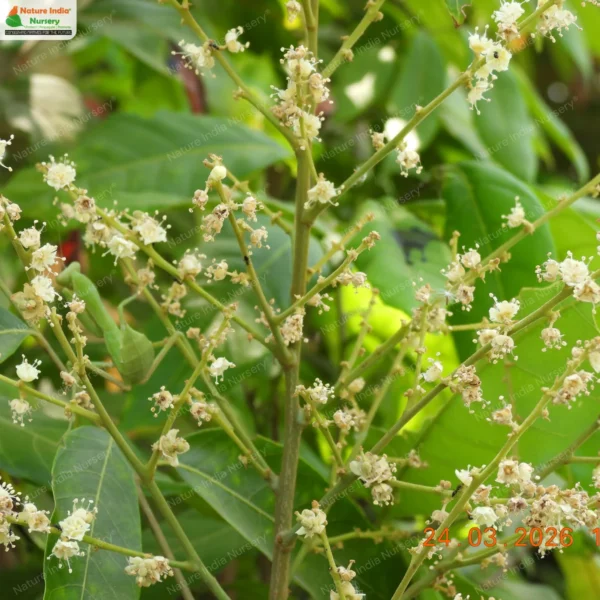


Dimocarpus longan is an evergreen fruit-bearing tree belonging to the family Sapindaceae. It is native to the Indian subcontinent and parts of Southeast Asia, and is valued for its sweet, edible fruits. The tree generally grows around 9–18 metres tall, developing a dense, spreading crown and a greyish-brown bark.
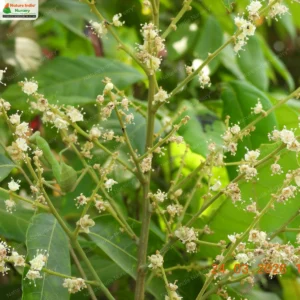
Its leaves are alternate and pinnately compound, with several pairs of glossy, leathery leaflets. Small yellowish-white flowers are borne in branched clusters at the ends of branches. The fruits grow in clusters and have a thin, brownish, slightly rough outer skin. Inside is a translucent, whitish, juicy pulp surrounding a shiny dark brown to black seed. The seed and surrounding pulp resemble an eyeball, which gives the fruit its common name, Dragon’s Eyes.
Habitat
Dimocarpus longan occurs in tropical and subtropical forest habitats, including evergreen and semi-evergreen forests. In India, it is recorded from the Western Ghats, northeastern regions and the Andaman and Nicobar Islands. It grows well in warm climates with adequate moisture and well-drained soil.
Planting and Care
Light: Prefers full sunlight for healthy growth and fruit production. Young plants benefit from some protection from intense afternoon sun.
Soil: Grows best in deep, fertile, well-drained soil enriched with organic matter. It tolerates a range of soil types but does not perform well in persistently waterlogged conditions.
Watering: Requires regular watering during establishment and dry periods. Mature trees can tolerate short periods of dryness.
Climate: Suited to warm tropical and subtropical climates. A relatively dry period can help encourage flowering.
Maintenance: Prune lightly to maintain a balanced canopy and remove dead or damaged branches. Provide sufficient space for its spreading crown.
Propagation: Can be propagated through seeds, air layering and grafting. Vegetative propagation is preferred for maintaining desirable fruit characteristics.
Additional Information
- Edible Fruit: The sweet, aromatic pulp is eaten fresh and is also used in desserts, beverages and preserves.
- Economic Importance: Longan is commercially cultivated as a fruit crop in several Asian countries.
- Ecological Importance: Its flowers attract insect pollinators, while the fruits can provide food for birds and other wildlife.
- Flowering and Fruiting: Indian botanical records report flowering and fruiting mainly from February to September, although the timing varies by location.
- Related Species: It belongs to the same family as lychee (Litchi chinensis) and rambutan (Nephelium lappaceum).