
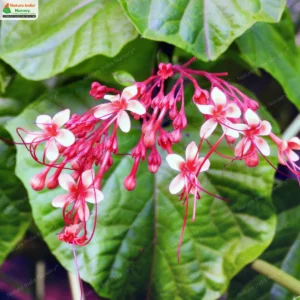
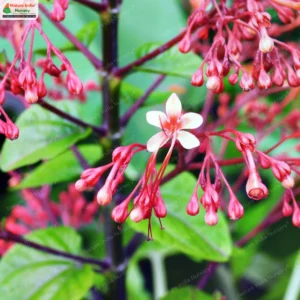
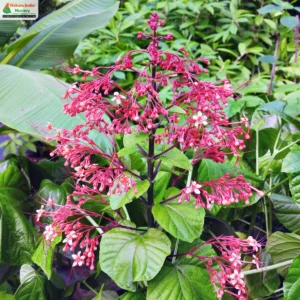
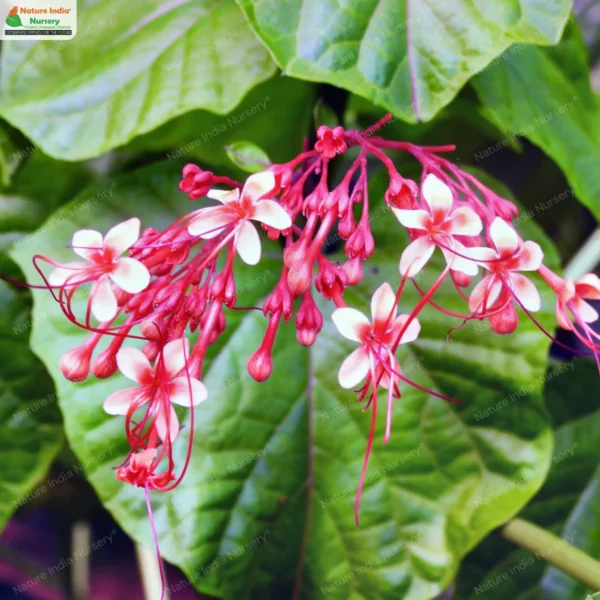


Clerodendrum paniculatum, commonly known as the Pagoda Flower, is a species of flowering shrub belonging to the Lamiaceae family. Native to tropical Asia, this plant is admired for its striking pyramidal clusters of bright orange-red flowers and lush ornamental foliage, making it a popular choice for tropical gardens.
The species is an evergreen shrub that typically grows 1–3 meters in height. It has large, deeply lobed, dark green leaves and produces spectacular tiered flower clusters resembling a pagoda, which bloom over an extended period.
Habitat
Clerodendrum paniculatum thrives in tropical and subtropical climates. It is commonly found in forest edges, open woodlands, gardens, and moist shaded habitats where temperatures remain warm throughout the year.
Planting and Care
Light: Prefers partial shade to full sun. Flowering is most abundant with several hours of direct sunlight.
Soil: Grows best in fertile, well-drained soil rich in organic matter with consistent moisture.
Watering: Requires regular watering to keep the soil evenly moist, especially during the growing season. Avoid prolonged waterlogging.
Maintenance: Remove spent flower clusters and prune lightly after flowering to encourage bushier growth. The plant is easily propagated through stem cuttings, root suckers, or division.
Additional Information
Ornamental Use: Clerodendrum paniculatum is widely cultivated for its vibrant, long-lasting flower clusters, making it an excellent choice for ornamental gardens, borders, and tropical landscapes.
Ecological Importance: The nectar-rich flowers attract butterflies, bees, and other pollinators, enhancing garden biodiversity.
Special Feature: Its distinctive pagoda-shaped flower clusters and bold foliage make it one of the most eye-catching ornamental shrubs in tropical and subtropical gardens.


