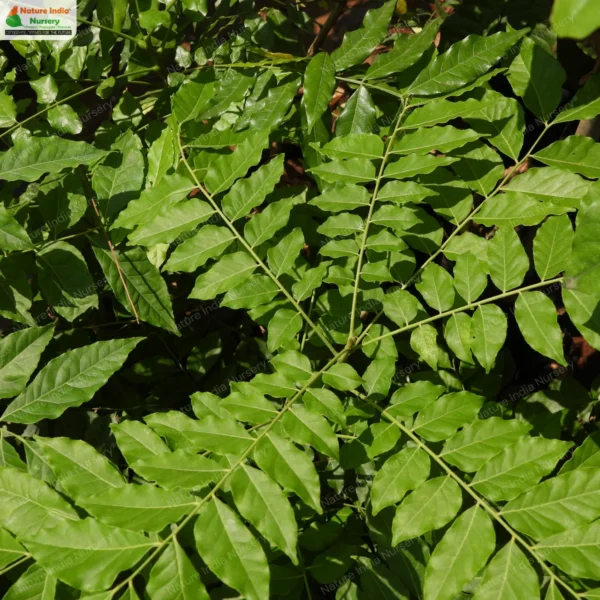


Clausena anisata is an aromatic shrub or small tree belonging to the citrus family, Rutaceae. It occurs naturally across tropical Africa and parts of South and Southeast Asia, including India. The plant is recognised by its pinnately compound leaves, small pale flowers and distinctive strong smell released when its foliage is crushed.
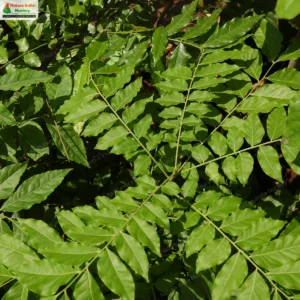
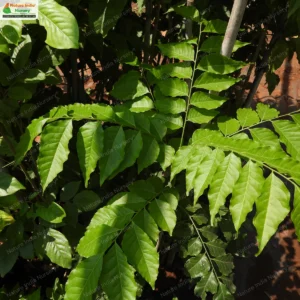
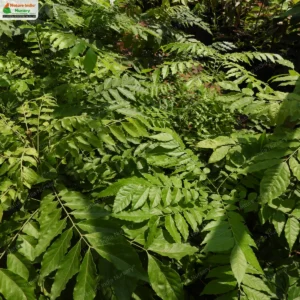
The plant generally grows about 2–6 metres tall, although it may reach around 10 metres under favourable conditions. Young branches are often softly hairy. The leaves are alternate and pinnately compound, usually bearing several pairs of leaflets and a terminal leaflet. The leaflets are elliptic to ovate, with slightly uneven bases and gland-dotted surfaces. When crushed, they release a strong, characteristic aroma.
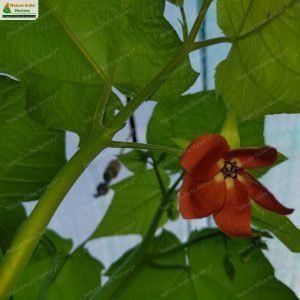
The small flowers are white to creamy-white, sometimes with yellowish or orange stamens, and are arranged in branched clusters arising from the leaf axils. The fruits are small, rounded to oval berries, green when young and turning red, purple or nearly black as they mature.
Habitat
Clausena anisata grows in mixed deciduous, moist deciduous and evergreen forests. It is also found along forest margins, scrub vegetation and foothills. In India, it occurs in several regions, including the Western and Eastern Ghats, and can grow at elevations of approximately 1,400 metres or higher in suitable habitats.
Planting and Care
- Light: Grows well in full sunlight to partial shade.
- Soil: Prefers well-drained soil with moderate organic matter.
- Watering: Water regularly during establishment. Once established, it can tolerate some seasonal dryness.
- Climate: Suited to warm tropical and subtropical climates.
- Maintenance: Requires little maintenance once established. Prune lightly to maintain shape and remove damaged branches.
- Propagation: Can be propagated through seeds collected from mature fruits.
Additional Information
- Aromatic Foliage: The leaves contain aromatic compounds and release a strong smell when crushed.
- Traditional Uses: Leaves, roots and bark have been used in traditional medicinal practices in different parts of its range. These uses are historical and do not establish clinical effectiveness or safety.
- Insect-Repellent Uses: In some regions, dried leaves have traditionally been used as an insect repellent.
- Ecological Value: The flowers provide resources for insect visitors, while the fruits may be consumed by birds and other wildlife.
- Identification: Its pinnately compound, gland-dotted leaves and characteristic aroma are useful features for identification.
- Flowering and Fruiting: In parts of India, flowering and fruiting are recorded mainly from February to May, though the season varies with region.