
Cinnamomum malabatrum is a small to medium-sized evergreen tree belonging to the family Lauraceae. It is native to western and southern India and is particularly associated with the Western Ghats. The tree is valued for its aromatic leaves and bark, which have traditionally been used as a spice and in regional medicinal preparations.
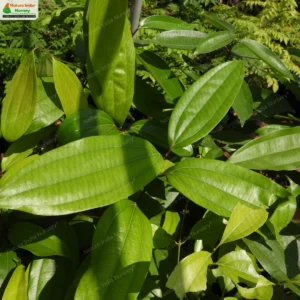
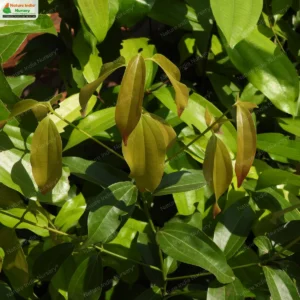
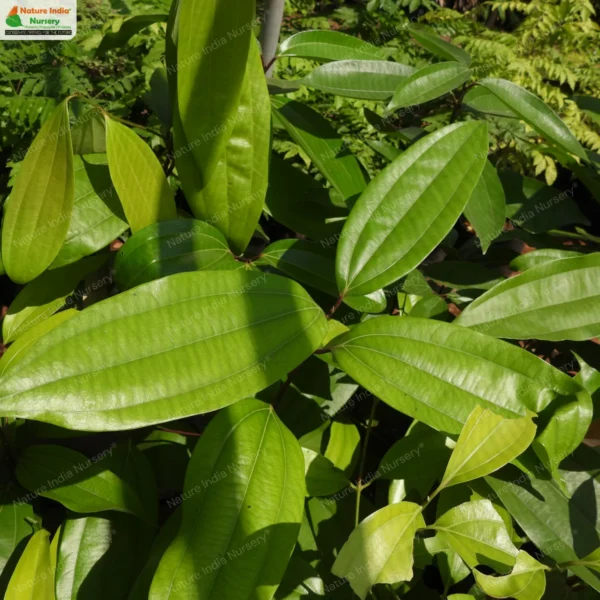
The tree generally grows about 7–20 metres tall. Its bark is reddish-brown, smooth or slightly longitudinally fissured, and aromatic. The leaves are simple, opposite, leathery and glossy, elliptic-oblong to lance-shaped, with entire margins. They typically have three prominent veins arising near the base and extending towards the leaf tip. The leaves release a pleasant aromatic fragrance when crushed.
The flowers are small, greenish-yellow and arranged in branched clusters in the leaf axils or near the ends of branches. The fruit is a fleshy, globose to oblong berry, usually dark bluish or blackish when mature, and is supported by a thickened cup formed by the persistent flower parts.
Habitat
Cinnamomum malabatrum occurs in tropical evergreen and semi-evergreen forests, as well as in some moist deciduous forest areas and plantations. It is mainly distributed in the Western Ghats of peninsular India, including parts of Kerala, Karnataka and Tamil Nadu. It generally grows in warm, humid environments and is often found on forested hills.
Planting and Care
- Light: Prefers partial shade to filtered sunlight, particularly when young.
- Soil: Grows best in fertile, humus-rich, well-drained soil.
- Watering: Requires regular watering during establishment and benefits from consistently moist soil.
- Climate: Suited to warm, humid tropical conditions.
- Maintenance: Maintain organic mulch around the root zone and protect young plants from prolonged dry periods.
- Propagation: Can be propagated through seeds collected from mature fruits. Fresh seeds are preferable.
Additional Information
- Aromatic Leaves: The leaves are fragrant and have traditionally been used as a flavouring ingredient in regional cuisine.
- Traditional Uses: The bark and leaves have been used in traditional preparations for various purposes. These historical uses do not establish clinical effectiveness.
- Spice Value: It is regarded as a wild relative of cultivated cinnamon and is locally valued for its aromatic plant parts.
- Ecological Value: As a native evergreen forest tree, it contributes to the biodiversity and structure of Western Ghats forests.
- Identification: The reddish-brown bark, glossy three-veined leaves and aromatic foliage are useful identifying features.
- Flowering and Fruiting: Regional botanical records report flowering and fruiting mainly from January to June, although the period varies with location.