

Calophyllum apetalum is an evergreen tree belonging to the family Calophyllaceae. It is native to the Western Ghats of peninsular India and is associated with the moist tropical forests of the region. Like other members of the genus Calophyllum, it has leathery leaves with fine, closely spaced lateral veins and produces fruits with a fleshy outer layer.
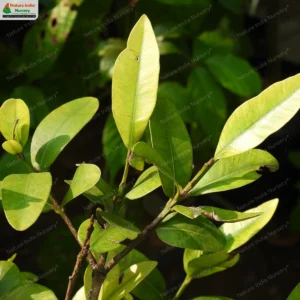
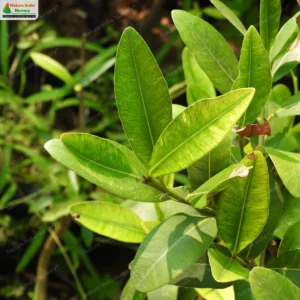
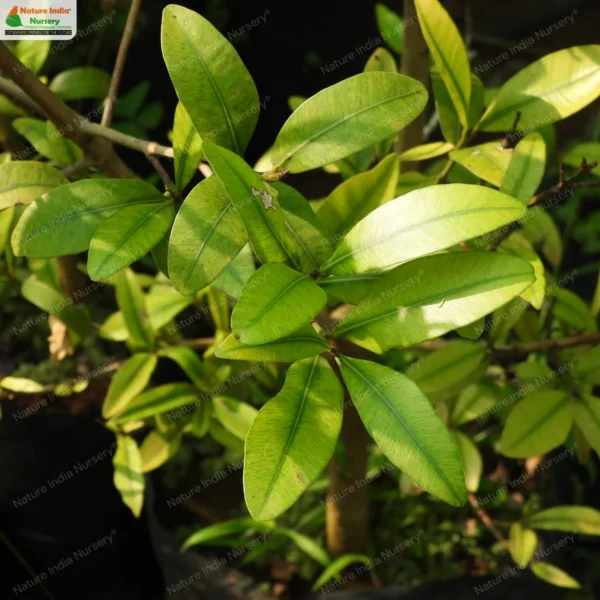
The tree develops a straight trunk and a spreading crown, and can grow to a considerable height in its natural forest habitat. Its leaves are simple, opposite, leathery and elliptic to oblong, with entire margins and a prominent midrib. The numerous fine lateral veins give the leaf surface a characteristic closely lined appearance.
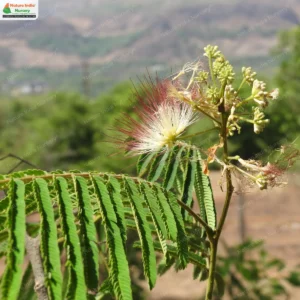
The flowers are small, generally white to creamy, and borne in clusters. The fruit is a rounded, fleshy drupe containing a single seed, becoming yellowish or brownish as it matures.
Habitat
Calophyllum apetalum is found in tropical evergreen and semi-evergreen forests, particularly in the Western Ghats of southern India. It is adapted to warm, humid conditions and generally grows in moist forest environments.
Planting and Care
- Light: Prefers full sunlight to partial shade; young plants benefit from some protection from intense afternoon sun.
- Soil: Grows best in deep, fertile, well-drained soil rich in organic matter.
- Watering: Requires regular watering during establishment and benefits from consistently moist soil.
- Climate: Suited to warm, humid tropical climates.
- Maintenance: Allow adequate space for the mature canopy. Remove dead or damaged branches when required.
- Propagation: Can be propagated through seeds collected from mature fruits. Fresh seeds are generally preferable.
Additional Information
- Timber: The wood is used locally for various purposes, although its use depends on regional availability and wood characteristics.
- Ecological Value: As a native forest tree, it contributes to the structure and biodiversity of Western Ghats forest ecosystems.
- Identification: The opposite, leathery leaves with numerous fine lateral veins are useful features for recognising the genus Calophyllum.
- Conservation: Its natural forest habitat makes the protection of mature trees and their surrounding ecosystems important.
- Flowering and Fruiting: The timing varies with local climatic conditions and elevation.