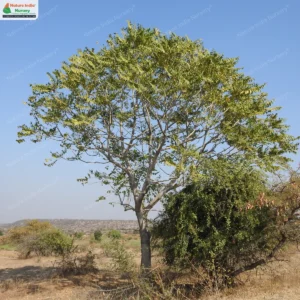


Archidendron bigeminum (L.) I.C.Nielsen is a small to medium-sized tree belonging to the family Fabaceae (legume family). Native to the Indian subcontinent and the Nicobar Islands, it is found in tropical forests, particularly the semi-evergreen and moist deciduous forests of the Western Ghats. It is recognised by its bipinnately compound leaves, white flowers and distinctive curved seed pods.
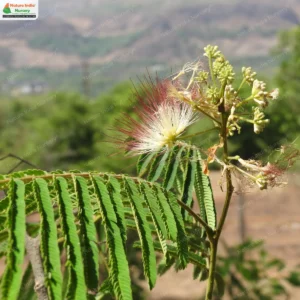
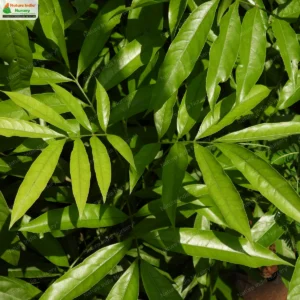
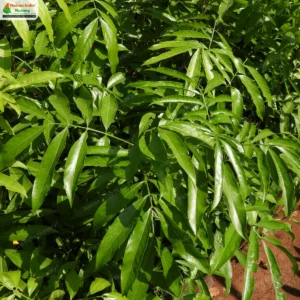
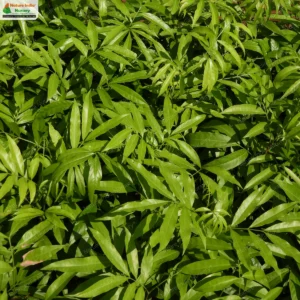
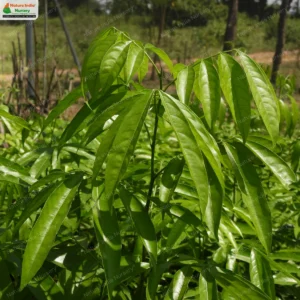
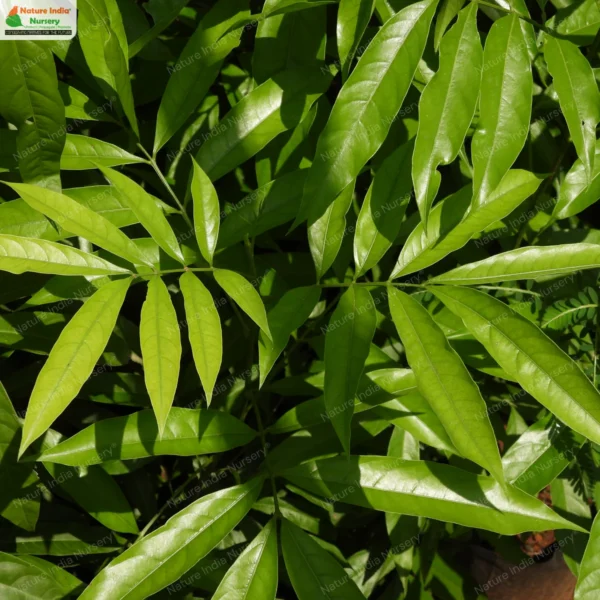
The tree is generally unarmed and develops a spreading crown. Its leaves are alternate and bipinnately compound, usually with one or two pairs of pinnae, each bearing several pairs of broad, elliptic leaflets. Small glands are often present along the leaf stalks and between the leaflets.
The flowers are small, white and arranged in clusters. The fruits are distinctive curved or coiled pods, brown on the outside and orange-red on the inner surface when mature. They contain several seeds and are a useful feature for identifying the species.
Habitat
Kachlora occurs in tropical semi-evergreen and wet deciduous forests. In India, it is recorded from the Western Ghats and several other regions, including Maharashtra, Karnataka, Kerala and Tamil Nadu. It generally grows in warm, humid forest environments.
Planting and Care
- Light: Prefers full sunlight to partial shade.
- Soil: Grows well in fertile, well-drained soil enriched with organic matter.
- Watering: Maintain moderate soil moisture, particularly during establishment. Avoid prolonged waterlogging.
- Climate: Suitable for warm tropical and subtropical conditions.
- Maintenance: Allow adequate space for the tree to develop its natural crown. Prune only damaged or unwanted branches.
- Propagation: Seed propagation is suitable. Fresh, mature seeds are preferable for better germination.
Additional Information
- Traditional importance: The plant is recorded in Indian medicinal plant literature under several regional names. Traditional references mention different plant parts, but these uses should not be considered proof of clinical effectiveness.
- Ecological value: As a native forest tree, it contributes to the biodiversity and structure of tropical semi-evergreen forests.
- Botanical identification: Its bipinnate leaves, small white flowers and characteristic coiled pods with contrasting brown and orange-red surfaces are important identifying features.
- Flowering and fruiting: Regional records from peninsular India indicate flowering and fruiting mainly between October and March, although the timing may vary with location.
- Other botanical names: Older botanical literature refers to this species as Archidendron monadelphum, Abarema bigemina and Pithecellobium bigeminum.