

Alstonia scholaris (L.) R.Br. is a large, evergreen to semi-evergreen tree belonging to the family Apocynaceae. Native to tropical and subtropical Asia and extending to northern Australia, it is widely distributed in India. It is valued as an avenue and ornamental tree for its attractive whorled foliage, fragrant flowers and broad canopy.
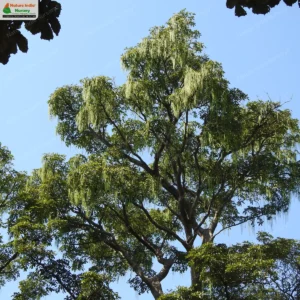
The tree commonly grows 12–20 metres tall, and may reach greater heights under favourable conditions. Its trunk is straight and often develops a spreading crown. The bark is greyish and rough, with a bitter, milky latex that oozes when injured.
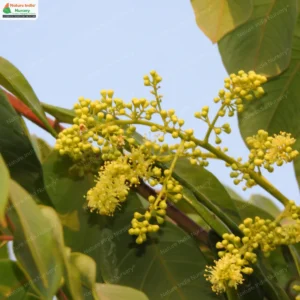
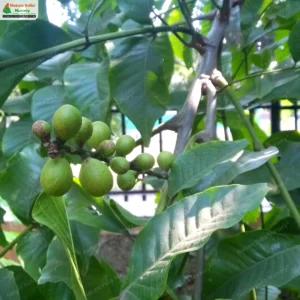
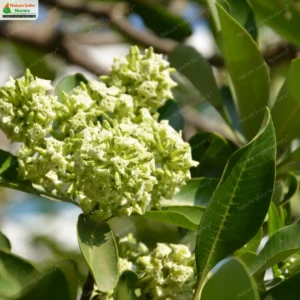
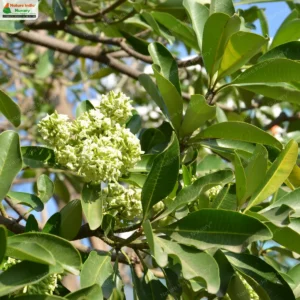
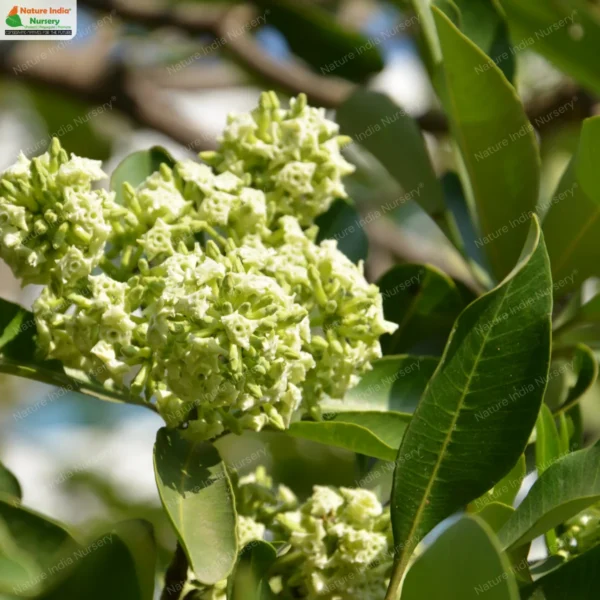
The leaves are simple, leathery and arranged in distinct whorls of approximately 4–7 around the branches. They are oblong to lance-shaped, glossy dark green above and paler beneath, with numerous closely spaced lateral veins. Small, fragrant, greenish-white flowers appear in dense clusters near the ends of branches. The fruits consist of a pair of long, slender, pendulous follicles containing numerous flattened seeds with tufts of silky hairs at both ends.
Habitat
Scholar Tree occurs in tropical moist and dry deciduous forests, evergreen forests and forest margins. It is distributed widely across India and is also commonly planted along roadsides, in parks, institutional grounds and gardens. It grows well in warm tropical climates and can tolerate seasonal dry conditions once established.
Planting and Care
- Light: Prefers full sunlight but can tolerate partial shade.
- Soil: Adaptable to different soil types; grows best in fertile, well-drained soil.
- Watering: Water regularly during the early growth stage. Mature trees can tolerate moderate periods of dryness.
- Climate: Suitable for warm tropical and subtropical climates.
- Maintenance: Provide adequate space for its mature size and spreading crown. Prune damaged or crossing branches when required.
- Propagation: Commonly propagated through fresh seeds. Seeds are light and wind-dispersed, so they should be handled carefully during sowing.
Additional Information
- Ornamental value: Its symmetrical whorled leaves, fragrant flowers and tall growth make it a popular avenue and landscape tree.
- Traditional importance: The bark, leaves and latex have been used in Ayurveda and other traditional medicinal systems. These traditional applications should not be regarded as established clinical treatments.
- Timber: The lightweight wood is used for plywood, packing cases, blackboards and other light wooden products.
- Cultural significance: The name Saptaparni refers to the characteristic whorled arrangement of leaves. In parts of India, sprigs of the tree are associated with academic ceremonies and scholarly honours.
- Ecological value: Its fragrant flowers attract insects, while the silky-haired seeds are dispersed by wind.
- Flowering and fruiting: Flowering and fruiting periods vary by region; flowering is commonly reported from October to February, with fruits developing over the following months.
- Identification: The whorled leaves, fragrant greenish-white flowers, bitter milky latex and paired long, slender fruits are distinctive features of this species.