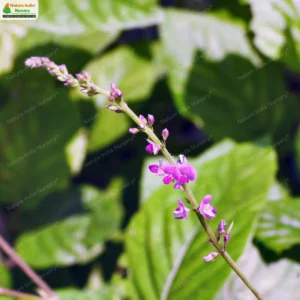
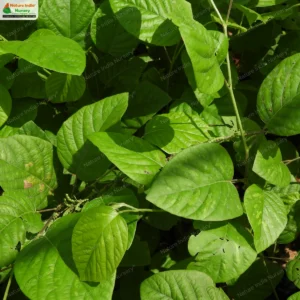
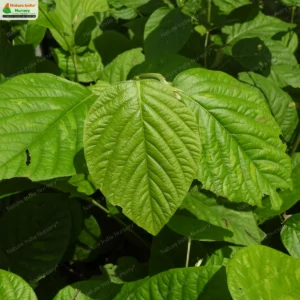
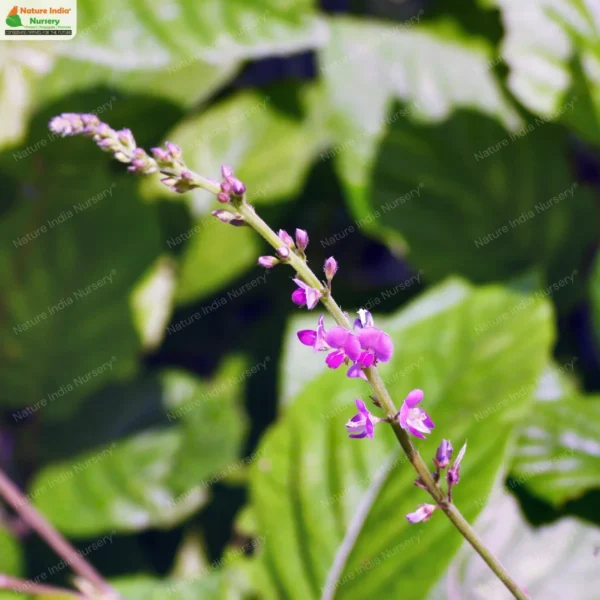


Pleurolobus gangeticus, commonly known as Sal Leaved Desmodium, is a perennial undershrub belonging to the Fabaceae (legume) family. It is native across tropical and subtropical regions of the Old World, including India, and is commonly found in seasonally dry tropical habitats. The species is widely known in botanical and ethnobotanical literature by its former name, Desmodium gangeticum.
The plant is generally an erect or somewhat spreading herbaceous to woody undershrub, usually growing up to about 1–2 metres tall. It has simple, unifoliolate, ovate to elliptic or lanceolate leaves, often with a somewhat hairy surface. The small violet, purplish or white flowers are borne in elongated racemes. Its fruits are characteristic jointed legumes, with several seed-bearing segments and deep constrictions between them.
Habitat
Pleurolobus gangeticus grows in tropical moist and dry deciduous forests, open woodland, forest clearings, grasslands and plantations. In India it occurs from the plains to approximately 1,400 metres, often as an undergrowth plant in wooded areas and open deciduous forests.
Planting and Care
Light: Full sun to partial shade. Good light encourages compact growth and flowering.
Soil: Well-drained loamy or sandy-loam soil enriched with organic matter. It can tolerate moderately dry soils once established.
Watering: Moderate watering during establishment; allow the upper soil to dry slightly between waterings once the plant is established.
Maintenance: Requires relatively little maintenance. Remove weak or dried stems after the growing season and trim lightly if a compact form is desired.
Additional Information
Ornamental Use: Its delicate foliage and small violet-to-white flowers make it suitable for native plant gardens, woodland edges, naturalistic landscapes and medicinal plant gardens.
Ecological Importance: As a member of the legume family, it contributes to soil ecology through its association with nitrogen-fixing microorganisms. Its flowers also provide resources for insects.
Medicinal Importance: Pleurolobus gangeticus has a long history of use in Ayurvedic and traditional Indian medicine, where it is associated with the traditional drug Shalaparni. Traditional medicinal use does not by itself establish clinical efficacy or safety.
Special Feature: The species is particularly recognizable by its simple one-leaflet leaves and deeply jointed, constricted pods. It is also notable for the taxonomic transition from Desmodium gangeticum to the currently accepted name Pleurolobus gangeticus.
Propagation: Primarily propagated by seeds. Mature seeds can be sown in a well-drained growing medium and kept moderately moist during germination.
Flowering and Fruiting: Flowers are produced in elongated racemes, followed by distinctive segmented pods. Flowering and fruiting periods can vary geographically, particularly across India’s different climatic regions.
Regional Names: Marathi names include साळवण (Salvan), while Hindi names include दीर्घमूली (Dirghamuli) and शालपर्णी (Shalparni). Sanskrit sources also record दीर्घमूला, शालपर्णी, ध्रुवा and अंशुमती.