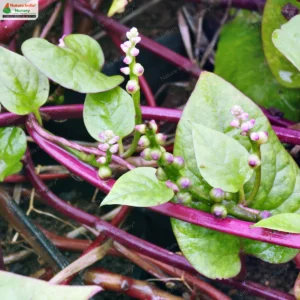
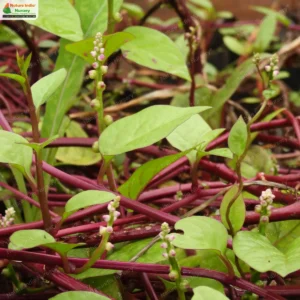
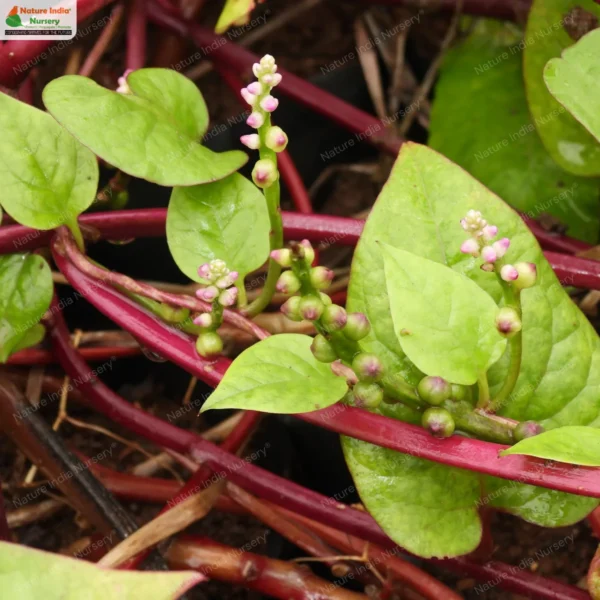


Basella alba, commonly known as Indian Spinach or Malabar Spinach, is a fast-growing, succulent perennial climbing herb belonging to the Basellaceae family. It is widely cultivated throughout tropical and subtropical regions for its tender, edible leaves and young shoots. The green-stemmed form is generally referred to as Basella alba, while purple- or red-stemmed forms are commonly cultivated as Malabar Spinach.
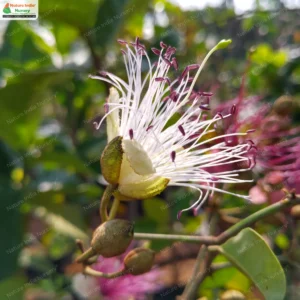
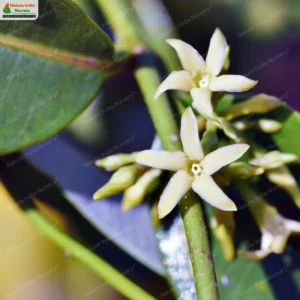
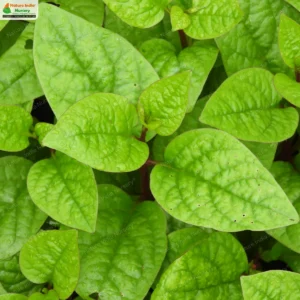
The plant is a vigorous, soft-stemmed climber that can grow 2–6 m or more when supported. The stems are fleshy and smooth, with alternate, thick, glossy, heart-shaped leaves. Small white to pinkish flowers occur in slender spikes, followed by round, fleshy fruits that become dark purple to black when mature and contain strongly coloured juice.
Habitat
Basella alba thrives in warm, humid tropical and subtropical climates. It is commonly cultivated around homes, kitchen gardens, farms and vegetable gardens, and can also become naturalized in moist disturbed habitats. It grows particularly well where adequate moisture and sunlight are available.
Planting and Care
Light: Prefers full sun to partial shade. Good sunlight encourages vigorous growth, while partial shade can help maintain tender foliage in very hot conditions.
Soil: Performs best in fertile, moisture-retentive but well-drained soil rich in organic matter. It tolerates a range of soil types when adequate nutrients and moisture are available.
Watering: Requires regular watering for lush leaf production. Do not allow the soil to remain dry for extended periods, particularly during hot weather.
Maintenance: Provide a trellis, fence, stakes or other climbing support. Regular harvesting of young shoots encourages branching and continuous production. Prune excessive growth when necessary to keep the plant manageable.
Additional Information
Edible Use: The tender leaves and young shoots are widely eaten as a leafy vegetable. They can be cooked like spinach and are used in curries, soups, stir-fries and other regional preparations. The leaves contain mucilage, giving cooked dishes a characteristic soft, slightly thick texture.
Ornamental Use: The vigorous green foliage, fleshy stems and colourful mature fruits make it useful in edible landscapes, kitchen gardens, trellis gardens and tropical ornamental plantings.
Ecological Importance: The flowers provide resources for small insects and pollinators, while the fleshy fruits are attractive to fruit-eating animals that can assist in seed dispersal.
Special Feature: The plant is notable for its succulent, heart-shaped leaves and rapid climbing growth. Purple- or red-stemmed forms provide additional ornamental value, especially when contrasted with the glossy green foliage.
Propagation: Easily propagated by seeds or stem cuttings. Stem cuttings root readily under warm and moist conditions.
Flowering and Fruiting: Flowering commonly occurs during the warmer and wetter part of the year, with the small flowers developing into distinctive purple-black berries.