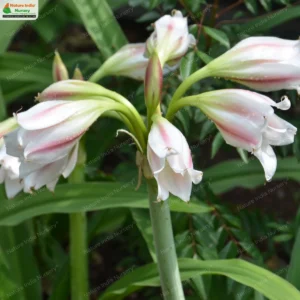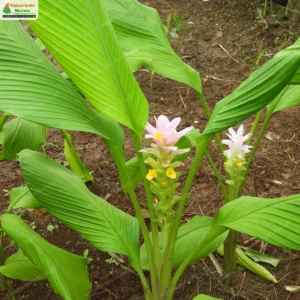
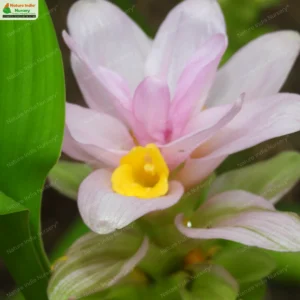
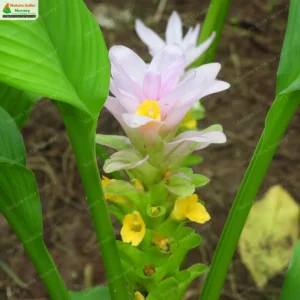
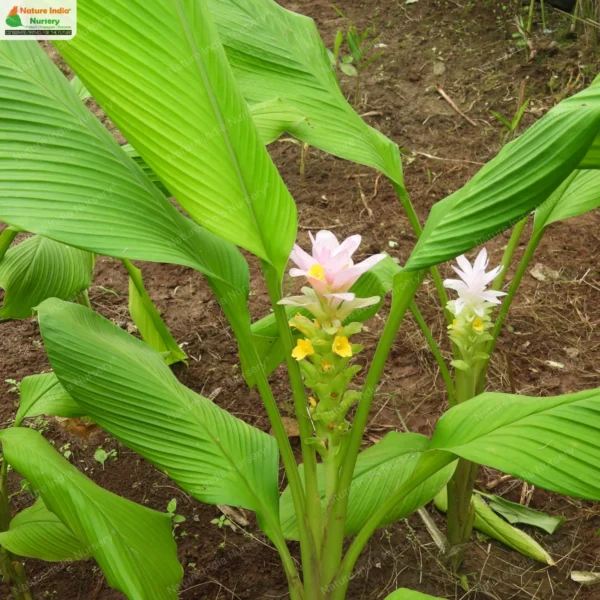


Curcuma pseudomontana, commonly known as Hill Turmeric, is a perennial rhizomatous herb belonging to the Zingiberaceae family. It is native to the Indian subcontinent and is particularly associated with the Western Ghats and other hilly regions of peninsular India. The species is valued as a native wild relative of cultivated turmeric and is notable for its attractive inflorescences and aromatic underground rhizomes.
The plant grows from a short, branched rhizome and forms a seasonal clump of broad, green leaves. The flowering shoot develops close to the ground, often appearing before or along with the foliage. Its inflorescence is composed of overlapping bracts, with the upper bracts often showing attractive pinkish or reddish coloration, surrounding pale yellow flowers.
Habitat
Curcuma pseudomontana occurs naturally in moist deciduous forests, forest margins, grasslands, hill slopes, and other seasonally moist habitats. It is particularly characteristic of the monsoon landscapes of the Western Ghats, where it grows in humus-rich forest soils.
Planting and Care
Light: Partial shade to filtered sunlight is ideal. It can tolerate gentle morning sun when sufficient moisture is available.
Soil: Prefers fertile, humus-rich, loose and well-drained soil with good moisture retention.
Watering: Keep the soil consistently moist during the growing season, particularly during establishment. Reduce watering as the plant enters its natural dormant period.
Maintenance: Apply organic mulch and compost to imitate its natural forest-floor conditions. Allow the foliage to dry naturally at the end of the growing season before removing it.
Additional Information
Ornamental Use: The attractive seasonal foliage and colourful pinkish-red bracts make Hill Turmeric suitable for native plant gardens, shaded landscapes, woodland gardens, and botanical collections.
Ecological Importance: As a native rhizomatous herb of the Western Ghats and other forest habitats, it forms part of the seasonal ground flora and contributes to the diversity of monsoon vegetation.
Traditional Importance: The rhizomes of Curcuma pseudomontana have been used in various traditional practices in parts of India. Such traditional uses should not be interpreted as established clinical treatments.
Special Feature: The plant is particularly attractive during the monsoon, when its colourful inflorescences emerge from the forest floor. Its seasonal growth cycle allows the underground rhizome to survive through the dry period.
Propagation: Primarily propagated through rhizome division. Healthy rhizome pieces containing viable buds can be planted at the beginning of the rainy season.
Flowering and Fruiting: Flowering generally coincides with the monsoon season, with the inflorescences appearing during the active growing period. Fruiting follows flowering under suitable conditions.
Dormancy: The aerial parts usually die back after the growing season, while the underground rhizome remains dormant and survives the dry season.