

Careya arborea is a medium-sized deciduous tree belonging to the family Lecythidaceae. It is native to the Indian subcontinent and other parts of tropical Asia. Commonly known as Wild Guava or Kumbi, it is recognised by its large leaves, distinctive flowers and rounded, fleshy fruits. The tree is valued for its ecological, traditional and practical uses.
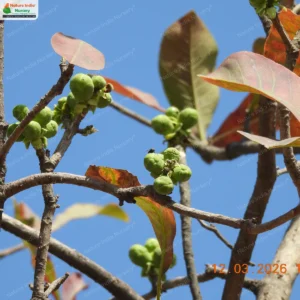
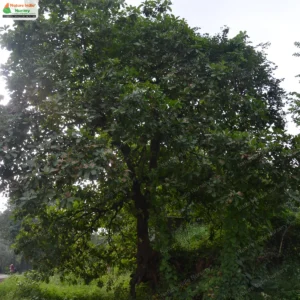
The tree generally grows about 8–15 metres tall, with a rough, greyish-brown bark that may peel in small flakes. The inner bark is reddish and fibrous. Its leaves are simple, alternate and clustered near the ends of branches. They are broadly obovate, large and leathery, with toothed or crenate margins. The foliage may turn reddish before falling during the dry or cool season.
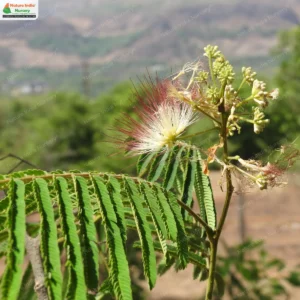
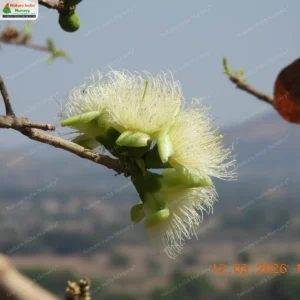
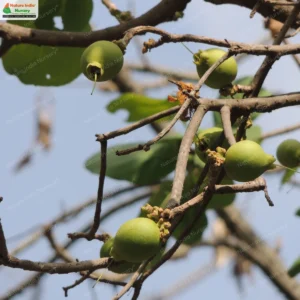
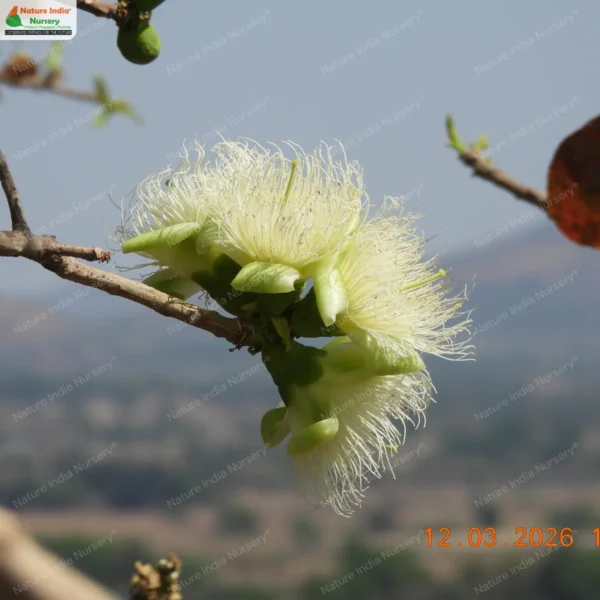
The flowers are large, greenish-white to creamy-white and borne in short, terminal spikes. They have numerous prominent stamens, giving the flowers a distinctive appearance. The fruit is a large, rounded, green berry, usually crowned by the persistent calyx and style. It contains numerous seeds embedded in fleshy pulp.
Habitat
Careya arborea occurs in tropical moist and dry deciduous forests, open woodland and plains. It is distributed across India and extends into neighbouring parts of South and Southeast Asia. It can also grow on rocky and lateritic soils and is occasionally found in hilly areas at elevations of around 1,200 metres.
Planting and Care
- Light: Prefers full sunlight and generally performs well in open locations.
- Soil: Adaptable to different soil types, including sandy, rocky and lateritic soils, provided drainage is adequate.
- Watering: Water regularly during establishment. Mature trees can tolerate seasonal dry conditions.
- Climate: Suited to tropical and subtropical climates, including regions with distinct wet and dry seasons.
- Maintenance: Requires space for its spreading crown. It is a hardy tree and can regenerate through coppicing.
- Propagation: Commonly propagated through seeds collected from mature fruits.
Additional Information
- Edible Fruit: The fleshy fruit is eaten in some regions, although the seeds have been reported as potentially toxic and should not be consumed.
- Traditional Uses: The bark and other plant parts have been used in traditional medicine. Such records describe traditional practices and do not establish clinical effectiveness.
- Bark Fibre: The fibrous bark has traditionally been used to make coarse cordage and was also used as a slow-burning match for igniting gunpowder.
- Timber: The wood is used locally for construction and other purposes.
- Ecological Value: Its flowers and fruits contribute to forest food resources, while the tree provides shade and habitat within deciduous forest ecosystems.
- Flowering and Fruiting: Flowering and fruiting are commonly recorded from February to August, though the season varies with region and climate.