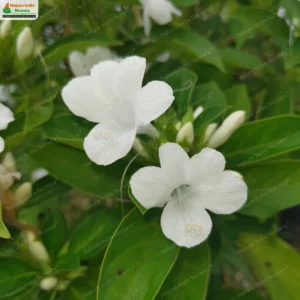
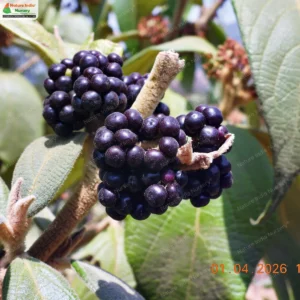
Grewia abutilifolia is a species of flowering shrub belonging to the Malvaceae family. Native to the Indian subcontinent, this hardy shrub is valued for its attractive yellow flowers, dense foliage, and ecological importance in dry forest ecosystems.
The species is a deciduous shrub that typically grows 1–3 meters in height. It has broad, ovate leaves resembling those of Abutilon, with a soft, hairy texture. The plant produces small, bright yellow flowers, which are followed by rounded fruits that turn dark purple to black when ripe.
Habitat
Grewia abutilifolia thrives in tropical and subtropical climates. It is commonly found in dry deciduous forests, scrublands, rocky slopes, and open grasslands, preferring well-drained soils and sunny locations.
Planting and Care
Light: Prefers full sun to partial shade, with abundant sunlight promoting healthy growth and flowering.
Soil: Grows best in well-drained sandy or loamy soils but adapts well to rocky and nutrient-poor soils.
Watering: Requires moderate watering during establishment. Once established, it is drought tolerant and needs only occasional watering.
Maintenance: Requires minimal maintenance. Light pruning after flowering helps maintain shape and encourages fresh growth. Propagation is usually done through seeds or stem cuttings.
Additional Information
Ornamental Use: Grewia abutilifolia is suitable for native gardens, dry landscapes, and restoration projects due to its attractive foliage and bright yellow flowers.
Ecological Importance: The flowers attract bees and other pollinators, while the fruits are consumed by birds and small mammals, supporting local biodiversity.
Traditional Uses: Various parts of the plant have been used in traditional medicine and rural communities for their potential medicinal and utility value. Such uses are based on traditional practices and should be supported by appropriate scientific or healthcare guidance before medicinal application.