
Dysoxylum malabaricum is a large, evergreen tree belonging to the family Meliaceae. Endemic to the Western Ghats of India, it is an important tree species of tropical wet evergreen and semi-evergreen forests. It can grow up to 30–40 metres tall and is valued for its durable, fragrant timber.
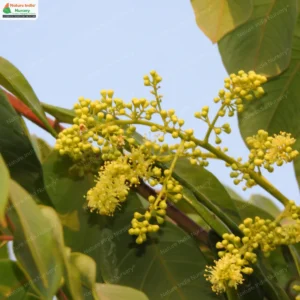
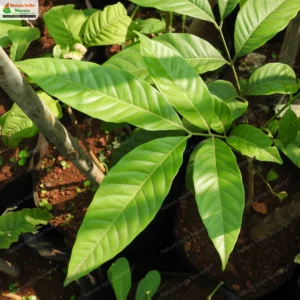
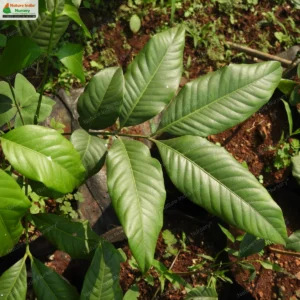
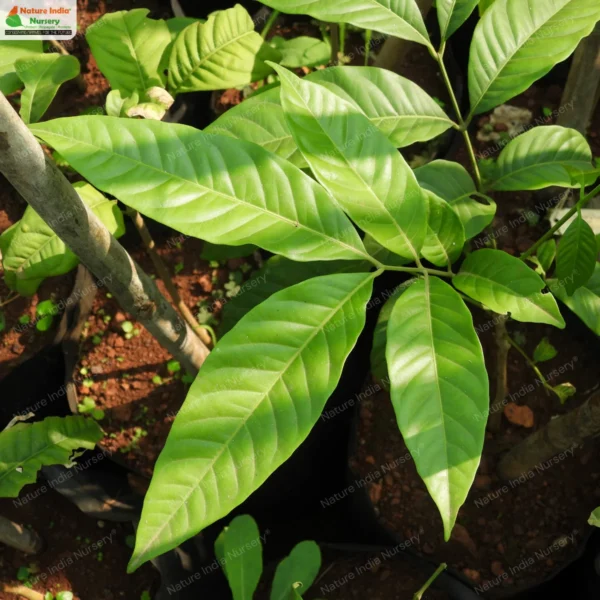
The tree has a tall, straight trunk with grey to greyish-yellow bark marked by small warty lenticels. Its leaves are alternate and pinnately compound, usually bearing 7–11 elliptic to oblong leaflets with entire margins. The small, fragrant, greenish-yellow to white flowers occur in branched clusters in the leaf axils. The fruit is a large, pear-shaped, bright yellow capsule with four prominent longitudinal grooves. On maturity, it opens to release reddish-brown seeds.
Habitat
Dysoxylum malabaricum naturally occurs in tropical evergreen and semi-evergreen forests of the Western Ghats, from Maharashtra southwards through Karnataka, Kerala and Tamil Nadu. It is generally found at elevations between 50 and 1,300 metres, particularly in warm, humid forest environments.
Planting and Care
Light: Prefers partial shade during early growth and can tolerate brighter conditions as it matures.
Soil: Grows best in deep, fertile, well-drained soil rich in organic matter.
Watering: Requires regular watering during establishment and consistently moist soil in dry periods.
Climate: Suited to warm, humid tropical climates with abundant rainfall.
Maintenance: A large forest tree that requires considerable space. Protect young plants from grazing and prolonged dry conditions.
Propagation: Propagated through seeds. Collect mature seeds from ripe yellow fruits and sow them fresh for better germination.
Additional Information
- Timber Value: The wood is valued for its strength, durability, fine texture and pleasant fragrance. It is used in furniture, construction, oil casks and specialised woodwork.
- Traditional Uses: Wood and wood oil have been used in traditional practices. These historical uses should not be interpreted as established medical treatments.
- Ecological Importance: Its fruits and seeds provide food for forest wildlife, including birds and mammals such as the Malabar giant squirrel.
- Flowering and Fruiting: Flowering generally occurs from February to May, while fruits mature mainly from May to July.
- Conservation: The species is endemic to the Western Ghats and is assessed as Endangered on the IUCN Red List. Habitat protection and sustainable management are important for its conservation.