
Aglaia roxburghiana (Wight & Arn.) Miq. is an evergreen tree belonging to the family Meliaceae, commonly known as the mahogany family. It is native to India and Sri Lanka, where it occurs mainly in tropical forest habitats. The species is valued for its attractive foliage, distinctive fruits and traditionally recognised uses.
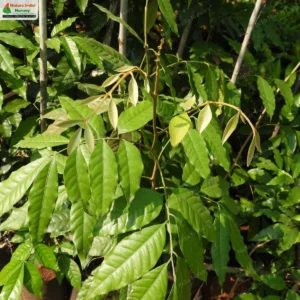
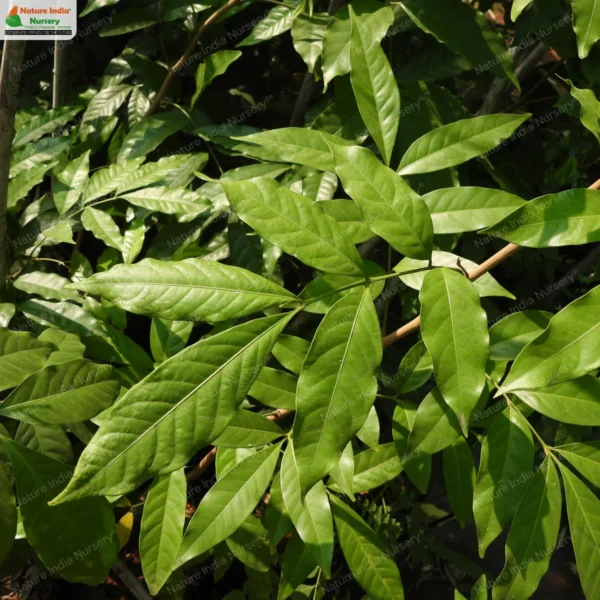
The tree generally grows up to about 10 metres tall. Its bark is greyish-brown, while the wood is characteristically reddish and hard. The leaves are alternate to subopposite and pinnately compound, usually bearing 3–7 elliptic leaflets. Small, rounded, yellowish flowers appear in clusters (panicles) in the leaf axils. The fruits are rounded to ellipsoid, scaly berries that become orange or yellowish when ripe.
Habitat
Indian Boodyarra grows in moist tropical forests, semi-evergreen forests and woodland areas. It is found in parts of the Western Ghats and other regions of India, as well as Sri Lanka. It can also occur in relatively dry forest localities.
Planting and Care
- Light: Full sun to partial shade; young plants benefit from some protection from harsh afternoon sunlight.
- Soil: Fertile, well-drained soil enriched with organic matter.
- Watering: Water regularly during establishment. Maintain moderate soil moisture while avoiding waterlogging.
- Climate: Warm tropical and subtropical conditions with moderate to high humidity are suitable.
- Maintenance: Allow adequate space for the tree to develop its natural canopy. Prune only to remove damaged or unwanted branches.
- Propagation: Usually propagated by seeds; sow fresh, mature seeds for better germination.
Additional Information
- Wood: The wood is reddish, hard and durable, and has been noted for its attractive appearance.
- Traditional importance: The plant is associated with the Sanskrit name Priyangu in traditional botanical and medicinal literature. Traditional references describe uses of different plant parts, but these should not be interpreted as established clinical treatments.
- Ecological value: Its flowers and fruits contribute to the resources available to forest-associated insects and wildlife.
- Flowering and fruiting: Flowering is reported around September–December in parts of India, although the season can vary geographically.
- Identification: The combination of pinnately compound leaves with 3–7 leaflets, small yellow flowers and scaly orange fruits helps distinguish this species.