
Actinodaphne wightiana (Kuntze) Noltie is an evergreen tree belonging to the family Lauraceae, the laurel family. Native to southwestern India, it is particularly associated with the tropical evergreen and semi-evergreen forests of the Western Ghats. The species is also recorded under the synonym Actinodaphne malabarica in some regional botanical references.
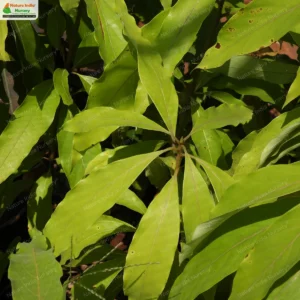
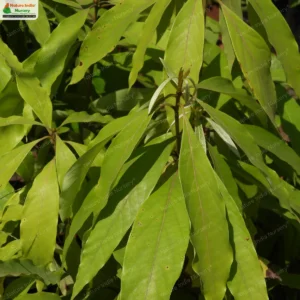
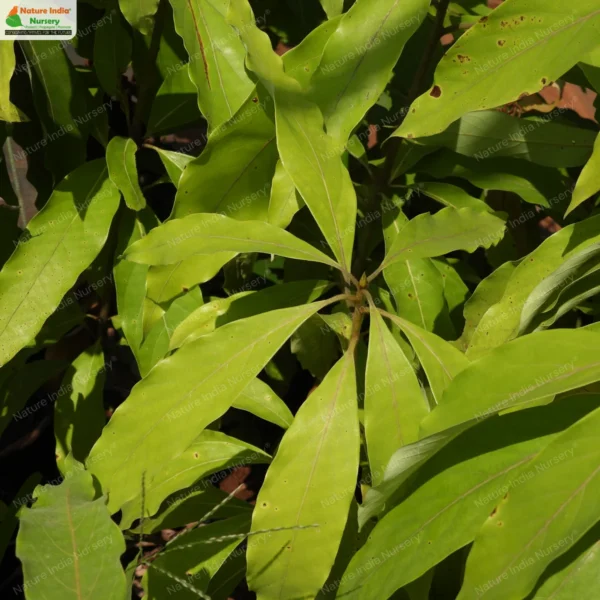
The tree can grow up to approximately 18–20 metres tall. Its bark is dark grey and generally smooth, while young branches are covered with dense, rusty-brown or tawny hairs. The leaves are simple, elliptic to elliptic-lanceolate, with entire margins and pointed tips. They are often arranged in opposite, subopposite or clustered patterns, and the lower leaf surfaces may be hairy.
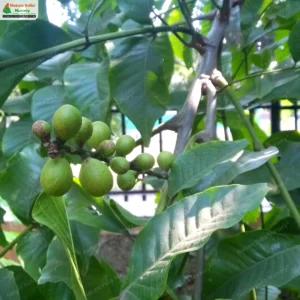
The flowers are small, yellowish and unisexual, occurring in clusters. The fruits are rounded, fleshy berries, approximately 7–10 mm across, which turn red when ripe.
Habitat
This species grows in tropical evergreen and semi-evergreen forests, especially in the Western Ghats of southern India. It is commonly associated with humid forest environments and can occur along forested slopes and in well-developed woodland.
Planting and Care
- Light: Partial shade to filtered sunlight, particularly when young.
- Soil: Deep, fertile, humus-rich and well-drained soil.
- Watering: Maintain consistent soil moisture, especially during the establishment period; avoid prolonged waterlogging.
- Climate: Warm, humid tropical conditions are suitable.
- Maintenance: Provide sufficient space for its development as a medium to large evergreen tree.
- Propagation: Seed propagation is suitable; fresh seeds are preferable for better germination.
Additional Information
- Ecological importance: As a native forest tree, it contributes to the structure and biodiversity of Western Ghats evergreen and semi-evergreen forests.
- Flowering and fruiting: Regional botanical records report flowering and fruiting mainly between August and March, although the exact period varies with location.
- Botanical identification: The young branches and leaf stalks are characteristically covered with tawny hairs. Its rounded red berries, seated in a persistent cup-shaped floral base, are useful identification features.
- Regional names: Kambiliviriji and Neyaram are Malayalam names recorded for this species.