
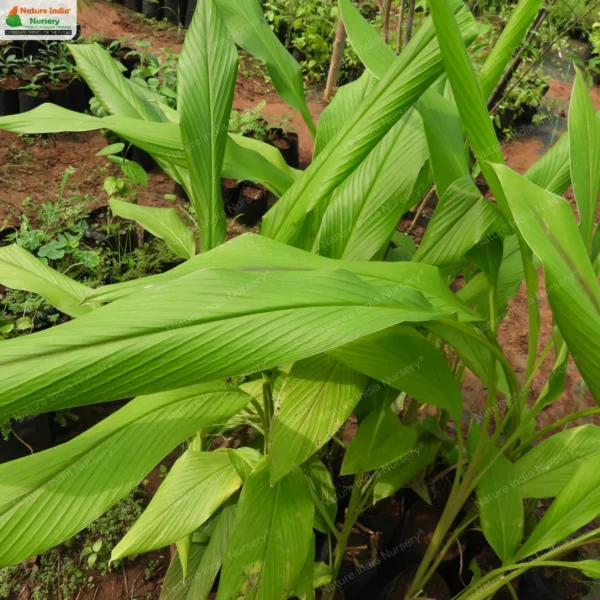
Curcuma aeruginosa, commonly known as Pink and Blue Ginger, is a rhizomatous herb belonging to the Zingiberaceae family. It is native to tropical Southeast Asia and occurs naturally in Bangladesh, Myanmar, Thailand, Vietnam, Cambodia, Laos, Malaysia, and Java. In India, it is cultivated and has become naturalized in some areas.
The plant is a perennial rhizomatous herb that produces upright leafy shoots from underground rhizomes. The foliage consists of broad, elongated green leaves, while the inflorescence is produced close to the ground or among the foliage and bears attractive pinkish to bluish-purple bracts. Its underground rhizomes are rich in starch.
Habitat
Curcuma aeruginosa is associated with wet tropical environments, particularly coastal areas and riverine alluvial soils. In India it has been recorded from parts of Karnataka and Kerala, where it occurs in cultivated or naturalized situations.
Planting and Care
Light: Partial shade to filtered sunlight is ideal. It can tolerate brighter conditions when adequate moisture is available.
Soil: Prefers fertile, loose, organic-rich and well-drained soil that retains some moisture.
Watering: Keep the soil consistently moist during active growth, but avoid prolonged waterlogging.
Maintenance: Provide mulch and adequate organic matter. The plant naturally becomes dormant during unfavorable periods, and dry foliage can be removed after the growing season.
Additional Information
Ornamental Use: The attractive foliage and unusual pink-to-blue coloration of the inflorescences make it suitable for tropical gardens, shaded beds, woodland gardens, and botanical collections.
Ecological Importance: As a rhizomatous forest-associated herb, it contributes to the ground-layer vegetation of moist tropical habitats.
Special Feature: The underground rhizomes are rich in starch and have been reported as a substitute for arrowroot in some traditional contexts.
Propagation: Primarily propagated through division of healthy rhizomes. Rhizome division is particularly suitable for maintaining desirable horticultural plants.
Flowering and Fruiting: Flowering has been recorded mainly during April–May in Indian populations.
Conservation: Kew records Curcuma aeruginosa as an accepted species and lists it as Least Concern according to the IUCN assessment.


