
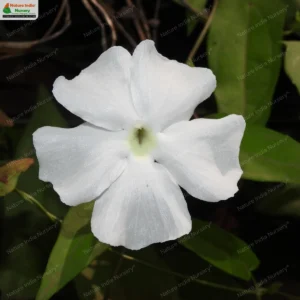
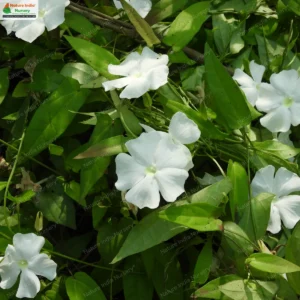
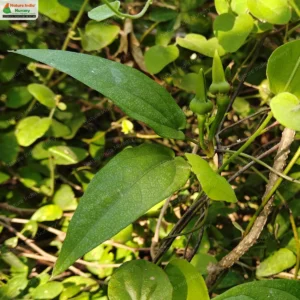
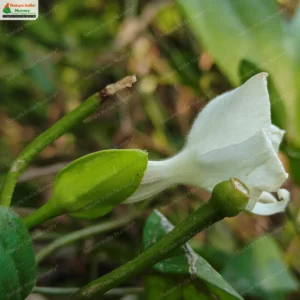

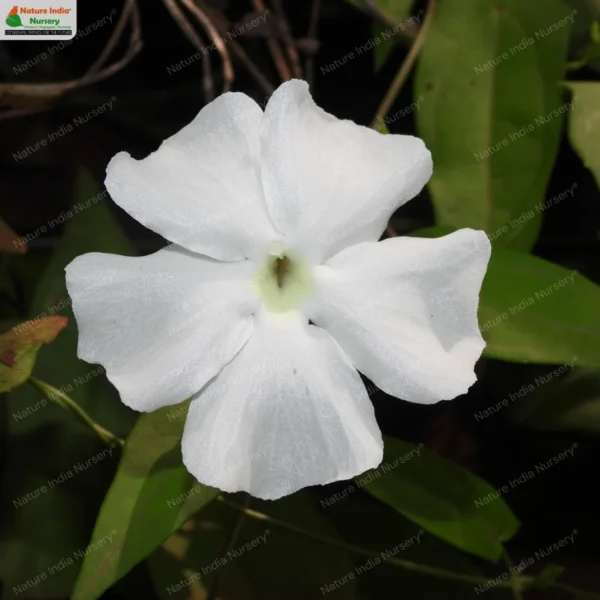


Thunbergia laevis, commonly known as White Clock Vine or Sweet Clock Vine, is a perennial climbing vine belonging to the Acanthaceae family. Native to the Indian Subcontinent, particularly India and Sri Lanka, it is a graceful tropical climber valued for its delicate flowers and vigorous growth.
The plant is a slender, twining climber with flexible stems and opposite leaves. It produces attractive pale to white flowers, giving the plant its ornamental appeal. In India, flowering and fruiting have been recorded from approximately July to March, although the flowering period can vary with climate and location.
Habitat
Thunbergia laevis occurs naturally in warm tropical environments of India and Sri Lanka. It is associated with tropical vegetation and can grow as a climbing plant in forested and semi-natural habitats. It is particularly suited to warm, humid conditions with adequate moisture.
Planting and Care
Light: Prefers bright filtered light or partial shade; it can also tolerate gentle morning sunlight.
Soil: Grow in fertile, organic-rich, well-drained soil that retains moderate moisture without becoming waterlogged.
Watering: Water regularly during active growth, allowing the upper layer of soil to dry slightly between watering.
Support: Provide a trellis, pergola, arch, fence, or other sturdy support for the twining stems.
Maintenance: Prune after vigorous growth or flowering to maintain shape, encourage branching, and prevent the vine from becoming excessively tangled.
Additional Information
Ornamental Use: An attractive flowering climber for pergolas, trellises, arches, fences, and tropical gardens. Its relatively delicate growth habit makes it suitable for softening vertical structures.
Ecological Importance: Its flowers contribute floral resources for insects and other flower-visiting organisms.
Special Feature: The species is closely associated with the name Sweet Clock Vine in Indian botanical references. The white-flowered forms are particularly attractive for gardens where a light-coloured flowering climber is desired.
Propagation: Generally propagated by seeds or vegetative cuttings.
Flowering and Fruiting: In India Flora Online, flowering and fruiting are recorded mainly from July to March.
Taxonomic Note: Thunbergia laevis Wall. ex Nees is currently accepted by Plants of the World Online (Kew). Thunbergia fragrans var. laevis is a recorded synonym, while several infraspecific taxa are recognized under T. laevis.


