
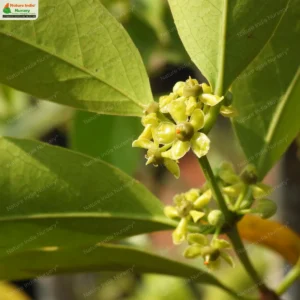
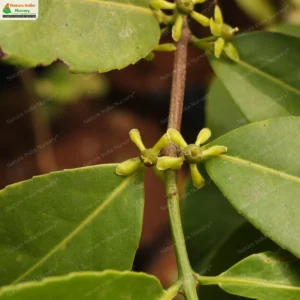
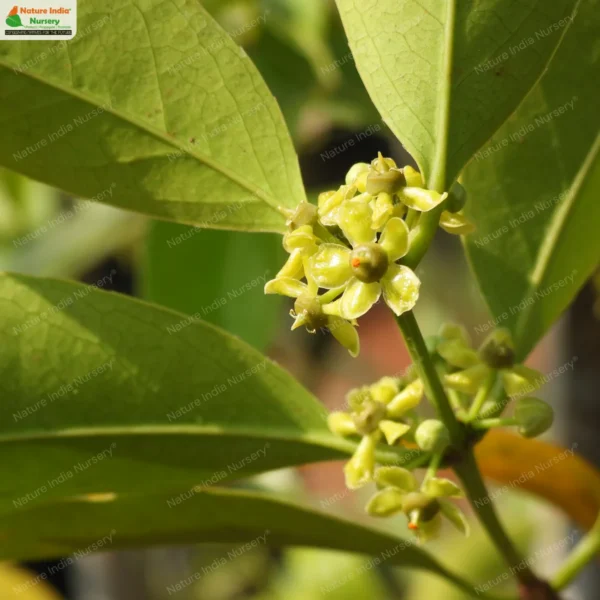

Salacia chinensis, commonly known as Holly-leaved Berried Spindle Tree, is a woody, evergreen climber or scrambling shrub belonging to the Celastraceae family. It is native to tropical and subtropical regions of South and Southeast Asia, including India, Sri Lanka, Myanmar, Thailand, southern China and parts of Malesia.
The plant develops long, woody, often climbing branches and may scramble through surrounding vegetation. Its leaves are simple, alternate, glossy and leathery, generally elliptic to ovate with a distinctly toothed or somewhat spiny margin. Small greenish-yellow flowers occur in clusters in the leaf axils. These are followed by rounded, fleshy fruits that mature from green to yellowish-orange or reddish, enclosing several seeds.
Habitat
Salacia chinensis occurs in tropical evergreen, semi-evergreen and moist deciduous forests, forest margins, thickets and wooded slopes. It is particularly associated with warm, humid environments and can occur from low elevations into the lower hills.
Planting and Care
Light: Partial shade to full sun. Young plants perform well under filtered light, while established plants can tolerate brighter conditions.
Soil: Fertile, humus-rich, well-drained soil with good moisture retention.
Watering: Moderate to regular watering during establishment. Maintain even moisture during active growth but avoid prolonged waterlogging.
Maintenance: Provide a sturdy support if grown as a climber. Prune lightly to control its spread and remove damaged or overcrowded branches.
Additional Information
Ornamental Use: Its glossy, holly-like foliage and brightly coloured fleshy fruits make it attractive for tropical gardens, native plant collections, trellises and naturalistic landscapes.
Ecological Importance: The dense foliage provides cover for small animals and insects, while its flowers and fleshy fruits contribute to local forest food webs.
Traditional and Medicinal Importance: Salacia chinensis has a long history of use in Ayurvedic and other traditional systems of medicine. Different parts of the plant have been traditionally used for several ailments, including metabolic disorders. These traditional uses should not be interpreted as established clinical efficacy or as a substitute for medical treatment.
Special Feature: The species is notable for its holly-like, toothed leaves and conspicuous fleshy berries. Its woody climbing habit allows it to grow through shrubs and forest vegetation.
Propagation: Primarily propagated by seeds. Fresh mature seeds can be sown in a well-drained, moisture-retentive growing medium. Vegetative propagation may also be possible from suitable stem cuttings.
Flowering and Fruiting: Small flowers are generally produced during the warmer and wetter part of the year, followed by fleshy fruits that mature over the subsequent months. Flowering and fruiting periods vary geographically.
Regional Names: सप्तरंगी (Saptarangi) and इंगळी (Ingali) are regional names associated with Salacia chinensis.
Taxonomic Note: Salacia chinensis L. is the currently accepted botanical name. The species has historically been confused with or treated under related names in older literature, so identification should preferably be based on current taxonomic references.


