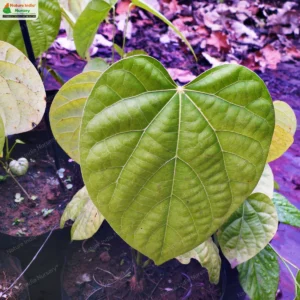
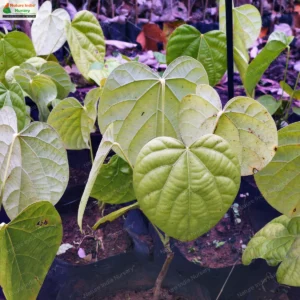
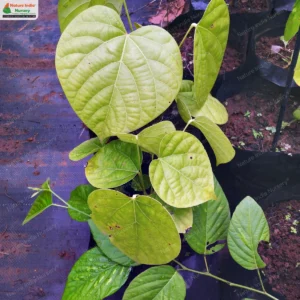
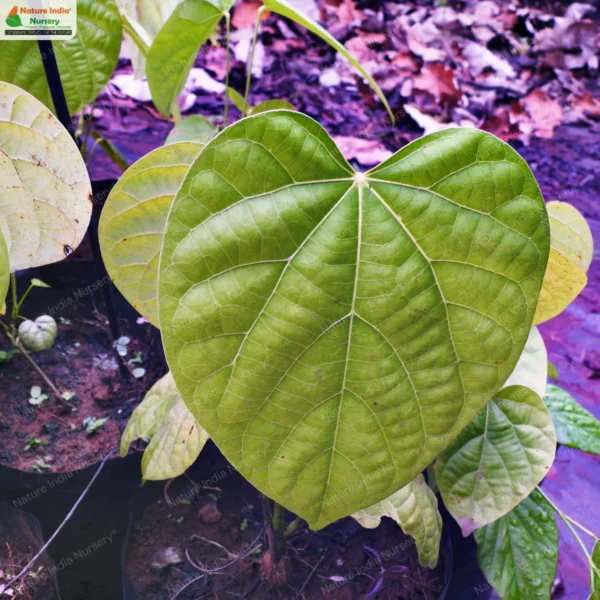


Anamirta cocculus, commonly known as Levant Nut, Fish Berry, or Crow Killer, is a woody climbing plant belonging to the Menispermaceae (Moonseed) family. It is native to tropical Asia and is naturally found in India and other parts of South and Southeast Asia. The species is a characteristic liana of tropical forests and is particularly associated with moist forest habitats.
The plant is a vigorous woody liana with climbing stems and broad, simple leaves. It produces panicles of small flowers, often arising from older stems, followed by rounded fruits that mature into distinctive berries. The dried fruits are historically known as Cocculus indicus or Levant berries.
Habitat
Anamirta cocculus occurs in tropical moist deciduous and evergreen forests, as well as in some sacred groves. In India it is recorded from regions including the Western and Eastern Ghats and other tropical forest areas. It is generally found in moist, warm environments, including hill forests, and has been recorded at elevations above about 600 m in some Indian localities.
Planting and Care
Light: Prefers bright light to partial shade. It grows naturally where climbing vegetation receives filtered sunlight beneath or around the forest canopy.
Soil: Performs best in fertile, organic-rich and well-drained soils. Moist but non-waterlogged conditions are preferable.
Watering: Requires regular moisture during establishment and active growth. The soil should not be allowed to remain completely dry for prolonged periods.
Maintenance: As a vigorous climber, it requires a strong support such as a trellis, pergola, tree or sturdy framework. Occasional pruning can be used to control its spread and maintain the desired form.
Additional Information
Ornamental Use: Its vigorous climbing habit and attractive foliage can make it suitable for large pergolas, trellises and naturalistic landscapes, provided sufficient space and structural support are available.
Ecological Importance: As a native forest liana, it contributes to the structural diversity of tropical vegetation and forms part of the climbing-plant community of moist forests.
Traditional and Historical Significance: The fruits have a long history of traditional use and trade and are known internationally as Levant berries, fish berries, or Cocculus indicus. The species has also been associated historically with fishing practices because of the biologically active compounds present in its fruits.
Special Feature: The species is notable for its woody climbing habit, panicles produced on older stems, and rounded fruits. The fruits contain potent bioactive compounds and should not be consumed, as they are toxic.
Flowering and Fruiting: Indian botanical records report flowering and fruiting over an extended period, approximately August–May, depending on locality.