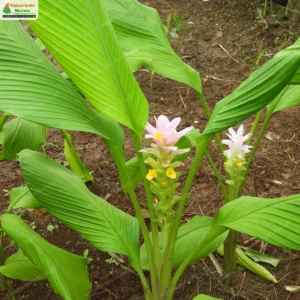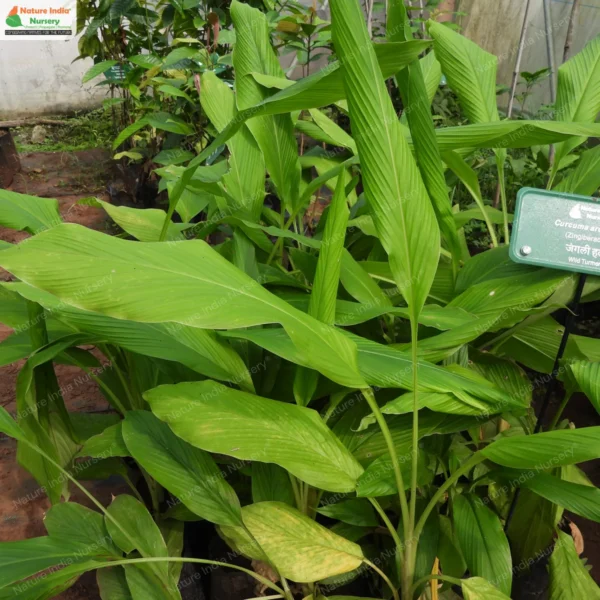
Curcuma aromatica, commonly known as Madras Turmeric or Wild Turmeric, is a perennial rhizomatous herb belonging to the Zingiberaceae family. It is native to the Indian subcontinent and is widely associated with tropical and subtropical forests, particularly in the Indian region. The species is closely related to cultivated turmeric (Curcuma longa) and is valued for its aromatic rhizomes and attractive inflorescences.
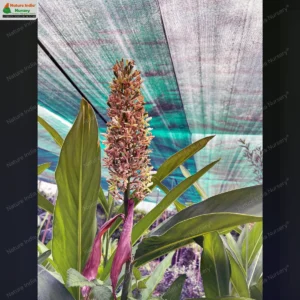
The plant grows from underground rhizomes and produces an annual clump of broad, upright leaves. Its inflorescence arises separately from the leafy shoots and bears pale yellow flowers surrounded by green and pinkish-white bracts. The rhizomes are strongly aromatic and are traditionally used in various preparations.
Habitat
Curcuma aromatica occurs in moist deciduous forests, forest margins, grasslands, shaded slopes, and other warm, humid habitats. It grows well in regions with seasonal rainfall and a distinct wet and dry period.
Planting and Care
Light: Partial shade to filtered sunlight is ideal, although it can tolerate morning or gentle full sun.
Soil: Prefers fertile, loose, humus-rich and well-drained soil with good moisture retention.
Watering: Water regularly during active growth, keeping the soil evenly moist. Reduce watering during the dormant period.
Maintenance: Apply organic mulch and compost around the plants. The foliage naturally dries back during dormancy and can be removed once completely dry.
Additional Information
Ornamental Use: Its broad foliage and attractive pink-and-white bracted inflorescences make it suitable for tropical gardens, shaded beds, herbal gardens, and botanical collections.
Traditional and Medicinal Importance: The aromatic rhizomes of wild turmeric have a long history of use in Ayurvedic and other traditional systems of medicine, as well as in traditional cosmetic and skin-care preparations. Traditional use should not be interpreted as established clinical efficacy.
Cultural Use: In India, wild turmeric has traditionally been valued for its fragrance and is used in certain cosmetic, ceremonial, and household preparations. It is particularly associated with traditional herbal and beauty practices.
Special Feature: Unlike cultivated turmeric, which is primarily grown for its culinary rhizome, Curcuma aromatica is especially valued for its aromatic rhizome and ornamental inflorescence.
Propagation: Mainly propagated through healthy rhizome pieces or division of established clumps. Plant rhizomes at the beginning of the rainy season for good establishment.
Flowering: Flowering generally occurs during the spring to early monsoon period, depending on local climate and rainfall.
Dormancy: The aerial parts commonly die back during the dry or unfavorable season, while the underground rhizomes remain dormant and regenerate when favorable moisture returns.