

Celastrus paniculatus, commonly known as Black Oil Plant or Intellect Tree, is a woody climbing shrub belonging to the Celastraceae (staff-tree) family. It is native to the Indian subcontinent and parts of Southeast Asia, where it occurs in tropical and subtropical forests. The plant is particularly valued for the oil obtained from its seeds and has a long history of use in traditional Indian medicine.
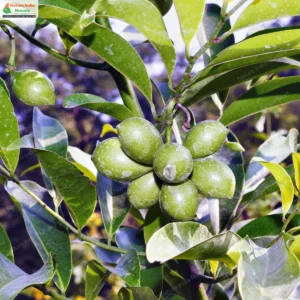
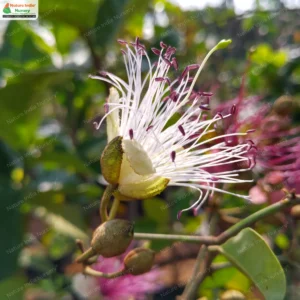
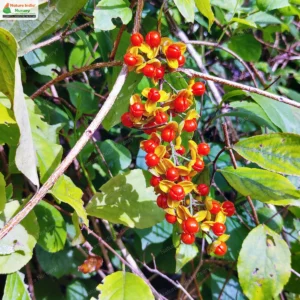
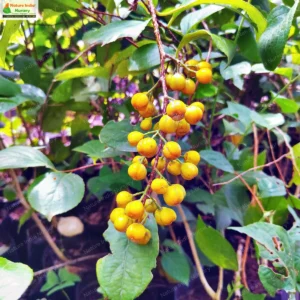
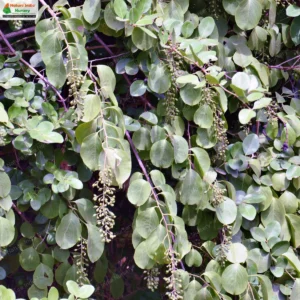
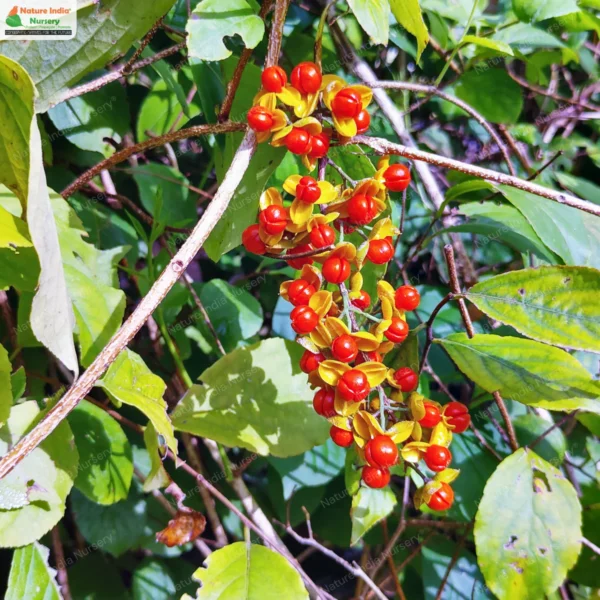
The plant is a woody, evergreen to semi-evergreen climber or scrambling shrub, capable of developing into a substantial vine with support. Its branches are slender and sometimes twining, with simple, glossy, elliptic to ovate leaves arranged alternately. Small greenish-yellow flowers occur in axillary or terminal clusters. The fruits are distinctive, rounded capsules that split open when mature to reveal seeds surrounded by a bright orange-red aril.
Habitat
Celastrus paniculatus occurs in tropical and subtropical forests, forest margins, scrublands and open woodland. It is adaptable to a range of habitats and is commonly associated with warm climates, well-drained soils and moderate moisture.
Planting and Care
Light: Prefers full sun to partial shade. Adequate sunlight encourages healthy growth and flowering.
Soil: Performs well in fertile, well-drained loamy or sandy-loam soils. It can tolerate relatively poor soils once established, provided drainage is good.
Watering: Provide moderate and regular watering during establishment. Mature plants can tolerate short dry periods but perform better with adequate moisture during active growth.
Maintenance: Provide a strong support or trellis if grown as a climber. Periodic pruning can be used to control its vigorous growth and maintain a compact form.
Additional Information
Medicinal Importance: The seeds yield a characteristic yellowish to reddish-brown oil, traditionally known as Malkanguni oil. Different parts of the plant have been used in Ayurvedic and other traditional medicinal systems. Traditional uses should not be interpreted as established clinical efficacy.
Ornamental Use: Its glossy foliage, climbing habit and attractive orange-red seed arils make it suitable for naturalistic gardens, large trellises and wildlife-oriented landscapes.
Ecological Importance: The colourful arils surrounding the mature seeds can attract fruit-eating birds and other wildlife, potentially contributing to seed dispersal.
Special Feature: The species is particularly recognizable by its bright orange-red arils exposed when the mature capsules split open and by the oil-rich seeds for which the plant is traditionally valued.
Propagation: Generally propagated by seeds; suitable stem cuttings may also be used under favourable conditions.
Flowering and Fruiting: Flowering generally occurs during the warmer months, followed by the development of characteristic capsules that mature later in the season.