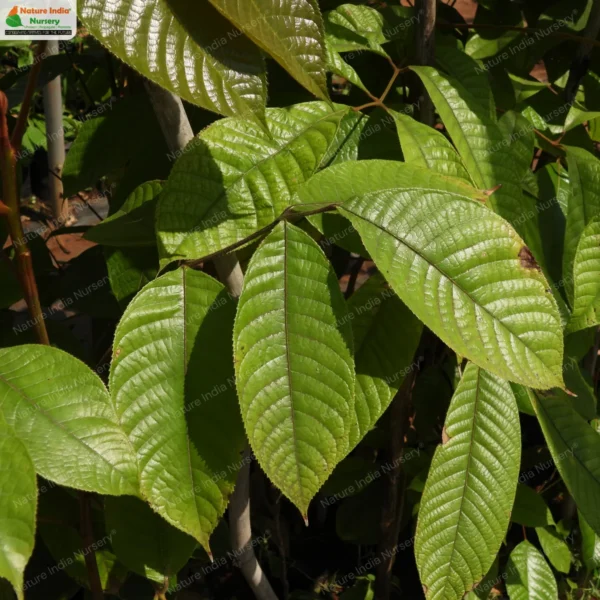

Canarium strictum is a large, evergreen, resin-producing tree belonging to the family Burseraceae. It is native to the Indian subcontinent and parts of Southeast Asia, and is particularly associated with the moist forests of the Western Ghats. The tree is well known for producing an aromatic dark resin called black dammar or dhoop, traditionally used as incense and in various local industries.
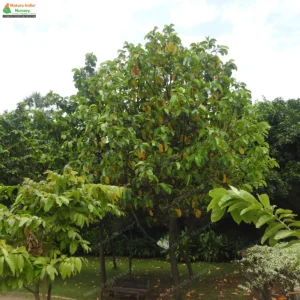
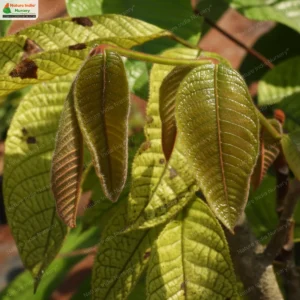
The tree can grow approximately 20–40 metres tall, with a straight trunk and a broad crown. Mature trees often develop prominent buttresses at the base. The bark is grey and may peel in irregular flakes; when cut, it exudes an aromatic resin. The young branches are commonly covered with rusty-brown hairs.
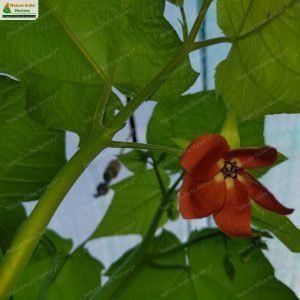
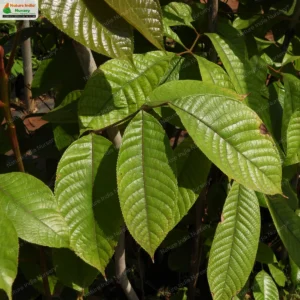
The leaves are large and compound, usually odd-pinnate, with several pairs of leathery leaflets. New leaves often emerge in striking yellow, reddish or crimson shades before turning green. The small, yellowish-white flowers are borne in branched clusters. The fruit is an oval to ellipsoid drupe, containing a hard stone and usually several seeds.
Habitat
Canarium strictum grows in tropical moist evergreen, semi-evergreen and moist mixed deciduous forests. It is commonly found in the Western Ghats, particularly in forested hills and valleys, and is also recorded from northeastern India and neighbouring parts of Asia. It generally occurs in humid forest environments, including higher-elevation evergreen and Shola forest areas.
Planting and Care
- Light: Prefers full sunlight to partial shade, with good light availability as it matures.
- Soil: Grows best in deep, fertile, well-drained forest soil rich in organic matter.
- Watering: Requires regular moisture during establishment and benefits from a humid growing environment.
- Climate: Suited to warm, humid tropical conditions.
- Maintenance: Allow ample room for its large canopy and buttressed trunk. Avoid damaging the bark, as the tree produces valuable resin.
- Propagation: Can be propagated through seeds collected from mature fruits. Fresh seeds are preferable for better germination.
Additional Information
- Resin Production: The tree yields a dark aromatic resin known as black dammar, black dhup or dhoop. It is traditionally burned as incense and used in varnishes and other products.
- Traditional Uses: The resin has a history of use in traditional medicine and religious ceremonies. These traditional applications should not be interpreted as proof of clinical effectiveness.
- Timber: The wood is used locally for various purposes.
- Ecological Value: As a large forest tree, it contributes to the canopy structure and biodiversity of moist tropical forests.
- Conservation Concern: Resin extraction and habitat degradation have placed pressure on natural populations in parts of the Western Ghats. Sustainable harvesting and protection of mature trees are important.
- Flowering and Fruiting: Regional records report flowering and fruiting at different times, commonly between March and August in some areas; the season varies geographically.