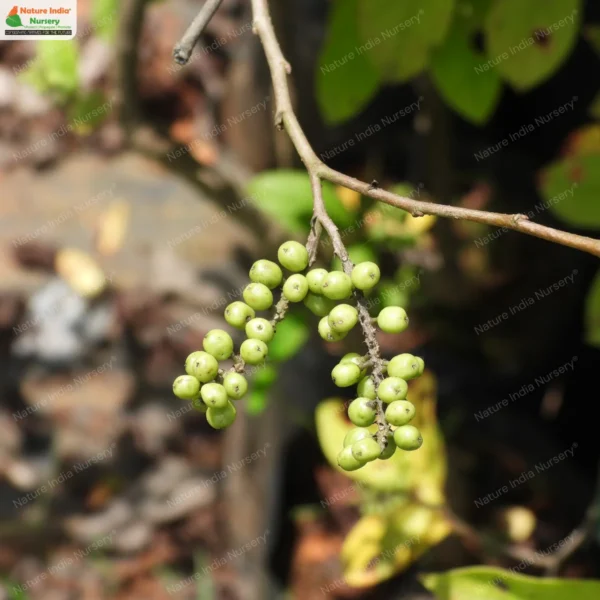


Antidesma bunius (L.) Spreng. is an evergreen or semi-evergreen tree belonging to the family Phyllanthaceae. Native to tropical and subtropical Asia, including India, it is valued for its clusters of colourful, edible berries and its usefulness as a fruit-bearing and ornamental tree. It is also known as Bignay in several Southeast Asian countries.
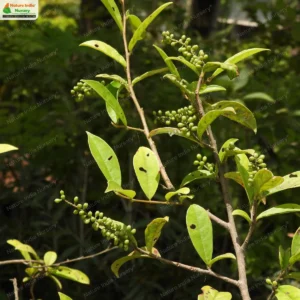
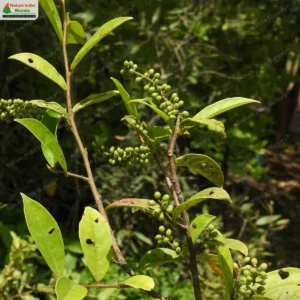
The tree generally grows 3–15 metres tall, although it may reach greater heights under favourable conditions. It develops a dense, spreading crown with a straight trunk and greyish-brown bark. The leaves are simple, alternate, oblong to elliptic-lanceolate, glossy and leathery, with pointed tips and entire margins.
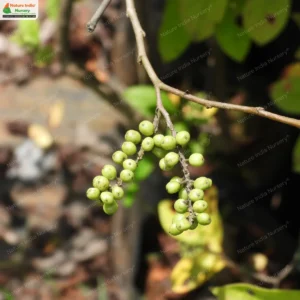
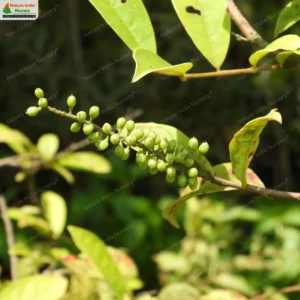
The species is dioecious, meaning male and female flowers usually occur on separate trees. Its small, reddish flowers are borne in elongated clusters. The fruits are small, rounded to ellipsoid berries arranged in hanging, grape-like clusters. They change colour as they mature, passing through reddish shades before becoming deep purple or black when ripe.
Habitat
Currant Tree occurs naturally in tropical evergreen and semi-evergreen forests, sacred groves, forest edges and secondary woodland. In India, it is recorded from the Western Ghats, Eastern Ghats, northeastern regions and the Andaman and Nicobar Islands. It generally prefers warm, humid environments and moisture-retentive soils.
Planting and Care
- Light: Grows well in full sunlight to partial shade.
- Soil: Prefers fertile, humus-rich, well-drained soil that retains some moisture.
- Watering: Water regularly during establishment and maintain moderate soil moisture, especially during dry periods.
- Climate: Suitable for warm tropical and subtropical climates.
- Maintenance: Provide adequate space for its spreading crown. Since male and female flowers generally occur on separate trees, planting both sexes is important if fruit production is desired.
- Propagation: Commonly propagated through seeds. Fresh seeds are preferable for successful germination.
Additional Information
- Edible fruits: The berries are edible and have a tangy to sweet-sour flavour. They can be eaten fresh or processed into juices, jams, jellies, sauces and preserves.
- Traditional uses: Bark and leaves have been used in traditional medicinal practices. Such uses are not proof of clinical effectiveness and should not replace professional medical advice.
- Other uses: The bark has been traditionally used for making ropes and cordage.
- Ecological importance: Its flowers attract insects, while the colourful fruits provide food for birds and other fruit-eating wildlife.
- Flowering and fruiting: In parts of India, flowering and fruiting are recorded from approximately April to August, although the season varies with location and climate.
- Identification: The glossy leaves, reddish flower clusters and hanging bunches of berries that turn dark purple or black at maturity are characteristic features of this species.