


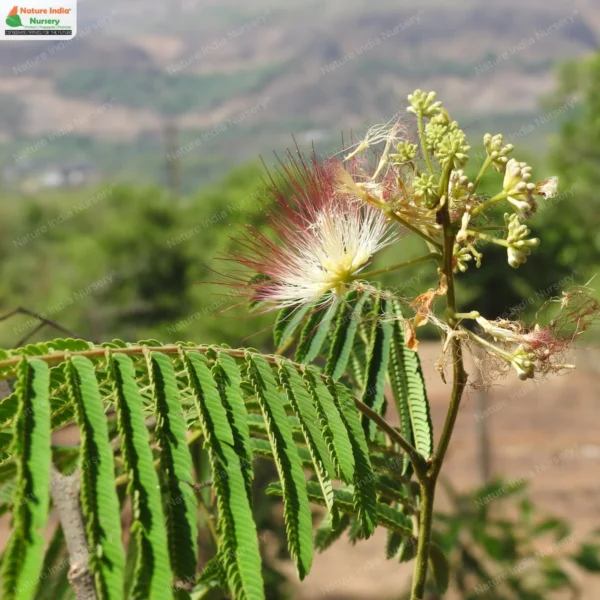


Albizia chinensis (Osbeck) Merr. is a medium to large, deciduous tree belonging to the family Fabaceae (legume family). Native to South and Southeast Asia, it is found in various parts of India, particularly in tropical forest regions. The species is valued for its shade, timber, foliage and usefulness in agroforestry.
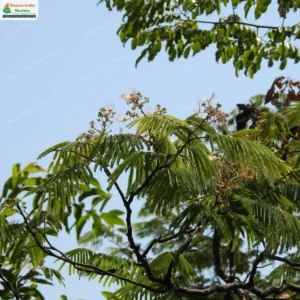
The tree can grow up to approximately 20–30 metres tall, developing a broad, spreading crown. Its bark is greyish-brown, and the young branches are often covered with fine yellowish hairs. The leaves are alternate and bipinnately compound, with several pairs of pinnae bearing numerous small, oblong leaflets. The foliage gives the tree a delicate, feathery appearance.
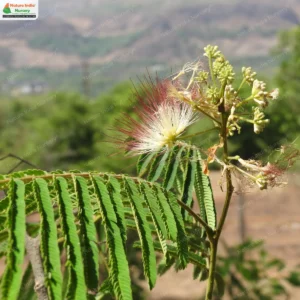
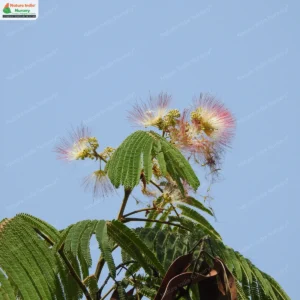
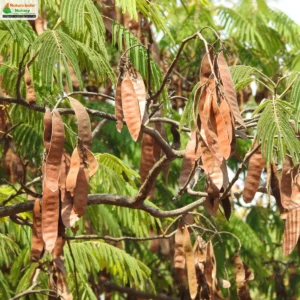
The flowers are small, greenish-white to yellowish, with numerous long stamens that give the flower clusters a soft, powder-puff appearance. They are arranged in rounded heads, usually grouped into larger branched inflorescences. The fruits are flat, elongated pods containing several seeds.
Habitat
Silk Tree grows in tropical evergreen and deciduous forests, particularly in moist woodland areas and locations near streams. It is distributed across India and other parts of tropical Asia. In India, it is recorded from the Western Ghats, Eastern Ghats and northeastern regions, including Maharashtra.
Planting and Care
- Light: Prefers full sunlight but can tolerate partial shade.
- Soil: Grows well in fertile, well-drained soil, including loamy and moderately moist forest soils.
- Watering: Water regularly during establishment. Mature trees can tolerate some seasonal dryness.
- Climate: Suitable for warm tropical and subtropical climates.
- Maintenance: Allow adequate space for its broad crown. Prune damaged or crossing branches when necessary.
- Propagation: Commonly propagated through seeds. Soaking or gently scarifying hard seeds may help improve germination.
Additional Information
- Ornamental and shade value: Its broad canopy and delicate foliage make it suitable for avenue planting, gardens and plantation shade.
- Fodder: The leaves and young branches are used as livestock fodder in some regions.
- Soil improvement: As a leguminous tree, it contributes organic matter through leaf litter and is useful in agroforestry systems.
- Timber: The wood is used for various light construction, packing and general-purpose applications.
- Ecological importance: Its flowers attract insects, while the tree provides shade and habitat for forest-associated wildlife.
- Flowering and fruiting: Flowering and fruiting have been recorded from approximately March to December, with timing varying according to local climate and elevation.
- Identification: The numerous tiny leaflets, pale powder-puff-like flower clusters and long, flat seed pods are characteristic features of this species.


